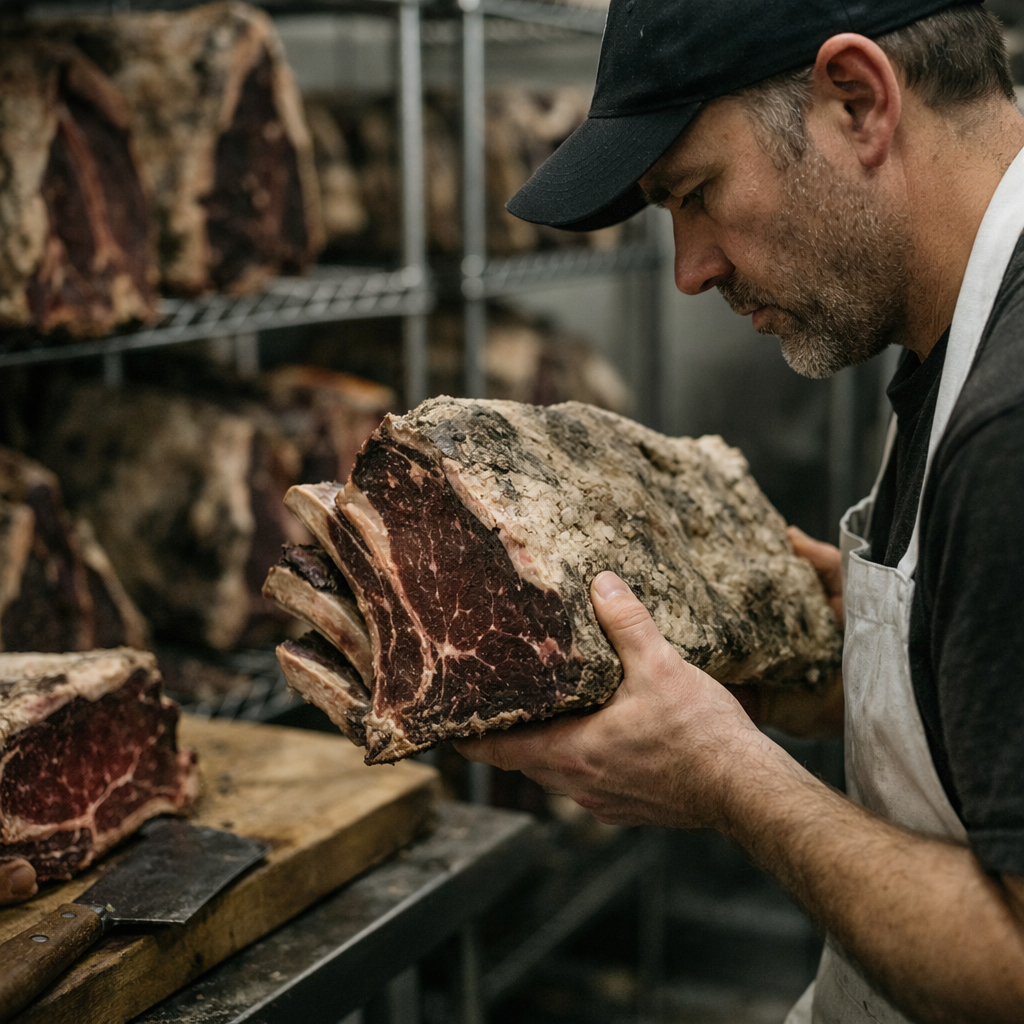
What Dry Aging Meat Really Means
Dry aging is the process of storing large cuts of meat—most commonly beef—in a carefully controlled environment for an extended period of time. Unlike wet aging, where meat is vacuum-sealed in plastic, dry aging exposes the exterior to air while maintaining strict control over temperature, humidity, and airflow. This slow, deliberate approach is designed to improve tenderness and develop a deeper, more concentrated flavor. For home cooks, butchers, and steak lovers alike, understanding dry aging meat can unlock restaurant-quality results with a richer aroma, a firmer bite, and a uniquely “beefy” taste that’s hard to replicate through other methods.
Why Dry Aging Enhances Flavor And Tenderness
The magic of dry aged meat comes from two main changes: moisture loss and enzymatic activity. As meat loses moisture over time, its flavor becomes more concentrated, leading to a more intense, savory profile. At the same time, naturally occurring enzymes in the muscle break down connective tissue, which can result in a more tender steak. Many people describe dry aged beef as having nutty, buttery, or slightly funky notes—complex flavors that develop gradually during aging. This is why dry aging steaks is widely considered one of the best methods for elevating premium cuts.
Choosing The Right Meat For Dry Aging
Not every cut is ideal for dry aging. Large, whole subprimals with a thick fat cap tend to perform best because the outer layer can protect the interior during the process. Ribeye, strip loin, and sirloin are popular choices, especially when left as full sections rather than individual steaks. Thicker cuts with good marbling generally produce the best dry aged beef results, since intramuscular fat helps maintain juiciness and adds richness after cooking. Lean or small cuts are typically less suitable, as they can dry out too quickly and offer minimal yield once the outer crust is trimmed away.
The Essential Conditions For Safe Dry Aging
Successful dry aging depends on precision and consistency. Temperature is a critical safety factor; meat must be kept cold enough to prevent harmful bacterial growth while still allowing natural aging enzymes to work. Humidity also matters—too low and the meat dries out excessively; too high and unwanted mold or spoilage risk increases. Airflow is equally important because it helps form a protective exterior and prevents stagnant conditions. When these factors are balanced correctly, the aging process is controlled, safe, and capable of producing exceptional flavor.
How Long Should You Dry Age Meat?
Dry aging time is a major factor in the final taste and texture. Shorter aging periods can still improve tenderness and slightly deepen flavor, while longer aging can produce bolder, more developed characteristics. Many steak enthusiasts start noticing a meaningful difference after a few weeks, and more intense results can come with extended aging. However, longer aging also increases weight loss and trimming waste, which affects cost and yield. Choosing the best dry aging timeline depends on your flavor preferences, the cut you’re using, and how much loss you’re willing to accept for more concentrated taste.
What Happens To The Outside Of The Meat?
One of the most recognizable features of dry aged meat is the dark, hardened exterior that forms during aging. This outer layer—sometimes called the pellicle or crust—develops as moisture evaporates and the surface dries. While it may look unappetizing at first glance, it serves a functional purpose by protecting the interior muscle. Before cooking, the crust is trimmed away to reveal the deep red, beautifully aged beef underneath. This trimming is normal and expected in the dry aging process, and it’s one reason why dry aged steaks often cost more than standard cuts.
Equipment Options: Dry Aging At Home Vs. Professional Setups
Professional dry aging is typically done in dedicated aging rooms or specialized commercial refrigerators designed to maintain exact environmental controls. For home dry aging, enthusiasts often use a separate refrigerator to avoid temperature fluctuations and cross-contamination with other foods. Some home setups also include tools like thermometer/hygrometers for monitoring conditions and dedicated racks for airflow around the meat. There are also consumer products and specialty bags that aim to make dry aging at home more accessible. Regardless of method, the goal is the same: stable temperature, consistent humidity, and clean airflow to encourage safe aging and great flavor.
Food Safety Tips For Dry Aging Meat
Dry aging requires care because you’re storing meat for an extended period. Clean handling, sanitation, and stable refrigeration are non-negotiable. Always start with high-quality meat from a trusted source, ideally with minimal handling and strong freshness. Keep the aging area clean, avoid opening the refrigerator too often, and never let the meat sit at unsafe temperatures. It’s also important to recognize that trimming is part of safe preparation—any dried exterior or questionable surface areas should be removed before portioning into steaks. With the right conditions and proper hygiene, dry aging can be both safe and rewarding.
How To Cook Dry Aged Steak For Best Results
Because dry aged beef has less moisture than fresh beef, it can cook a bit faster and may brown more readily. Many cooks prefer simple methods that highlight the meat’s unique flavor—like a hot cast-iron sear followed by gentle finishing heat, or reverse searing for maximum control. Seasoning is usually kept minimal: salt, pepper, and perhaps a touch of garlic or herbs. Letting the steak rest after cooking is especially important for dry aged cuts, helping redistribute juices and maintain tenderness. Done well, the final steak delivers concentrated beef flavor with a tender, steakhouse-quality bite.
Is Dry Aging Worth It?
Dry aging is often considered a premium technique because it takes time, space, and careful control, and it results in some trim loss. But for many meat lovers, the payoff is worth it: intensified flavor, improved texture, and an elevated eating experience that stands apart from typical grocery-store steaks. Whether you’re a curious beginner or a serious steak enthusiast, learning the fundamentals of dry aging meat can help you appreciate why it has become such a respected craft in butchery and high-end cooking.
You can explore the full article by going to the following link: https://foodsk.com/the-ultimate-guide-to-dry-aging-meat/