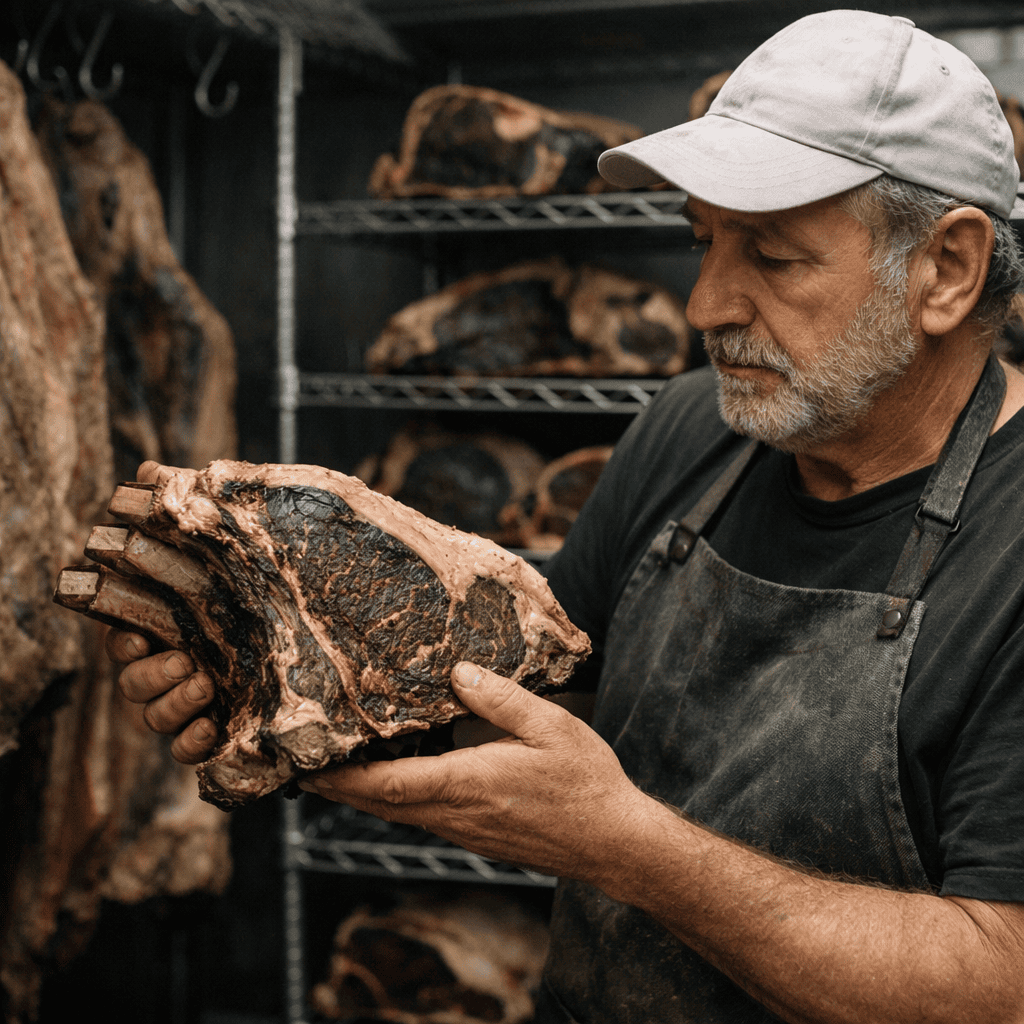
What Dry Aging Is And Why It Matters
Dry aging is a traditional method of improving beef by storing large cuts in a carefully controlled environment for an extended period of time. Unlike wet aging, where beef is sealed in vacuum bags, dry-aged beef is exposed to air while temperature, humidity, and airflow are managed to keep the meat safe. Over time, natural enzymes break down muscle fibers, helping the beef become more tender, while moisture loss concentrates flavor. The result is a steak experience that is often described as deeper, richer, and more complex than standard retail beef.
Dry aging has become increasingly popular in steakhouses and among home cooks who want restaurant-quality results. Understanding how the process works, what to look for when buying, and how to cook dry-aged beef correctly makes it easier to decide whether it’s worth the price premium.
How The Dry Aging Process Works
The core of dry aging is controlled decomposition—done safely and intentionally. Beef is typically aged as a primal or subprimal cut (like rib or strip loin) with the fat cap intact. During aging, enzymes naturally present in the meat begin breaking down proteins. This gradual tenderization is one of the key benefits and explains why properly dry-aged steak can feel buttery even with minimal preparation.
At the same time, water evaporates from the surface of the beef. This moisture loss intensifies taste because the beef’s compounds become more concentrated. A firm, dark outer layer—often called the pellicle—forms on the exterior. This protective crust is trimmed off before the steaks are portioned, revealing the edible interior that has been transformed by time and precise storage conditions.
Dry Aging Vs Wet Aging: What’s The Difference?
Dry aging and wet aging both improve meat, but they create different outcomes. Wet aging, the more common method in supermarkets, happens in sealed packaging. It offers some tenderization, but because moisture is retained, the flavor stays closer to “fresh beef.” Wet-aged beef can also develop a slightly metallic or “serumy” note from being stored in its own juices.
Dry-aged beef, on the other hand, trades yield for flavor and texture. Because the exterior dries out and must be trimmed, there is more waste, which increases cost. In return, you get a steak that is often described as nuttier, beefier, and more aromatic, with a firmer texture that sears beautifully.
The Ideal Conditions For Dry Aging Beef
Successful dry aging depends on strict environmental control. Temperature needs to stay cold enough to prevent unsafe bacterial growth while still allowing enzymatic activity. Humidity must be balanced—too dry and the meat will desiccate; too humid and you increase spoilage risk. Airflow is equally important because it helps regulate moisture on the surface and discourages harmful microbial growth.
This is why professional dry aging is typically done in dedicated aging rooms or specialized dry-aging fridges. When these factors are managed correctly, aging enhances the beef gradually, producing consistent, premium results.
How Long To Dry Age For The Best Flavor
Dry aging time is not one-size-fits-all. Shorter aging periods deliver a noticeable improvement in tenderness and a mild boost in flavor. As aging time increases, the flavor becomes more pronounced and distinctive. Many steak lovers enjoy the balance found in moderate aging, while enthusiasts seek longer ages for intense complexity.
Longer aging increases trim loss and can introduce stronger “funky” notes that not everyone prefers. The best approach is to match aging duration to your taste: if you’re new to dry-aged beef, starting with a more moderate age helps you learn what you enjoy without overwhelming the palate.
What Dry-Aged Beef Tastes Like
Dry-aged beef is valued for its concentrated “beefiness” and its layered, savory character. People often describe hints of roasted nuts, browned butter, or earthy, umami-rich aromas. The texture tends to be tender yet substantial, with a dense bite that feels more luxurious than typical steak.
The crust that forms during aging is not meant to be eaten; it’s trimmed away. What remains is a steak that develops exceptional browning during cooking, producing a deep, flavorful sear. Because the flavor is already intensified, dry-aged beef often shines with simpler seasoning—salt, pepper, and proper technique.
Buying Dry-Aged Steak: What To Look For
When purchasing dry-aged beef, consider the cut, the aging length, and the source. Reputable butchers and specialist retailers should be transparent about how long the beef was aged and under what conditions. You can also ask whether the aging was done on the bone or boneless; some people prefer bone-in cuts for perceived flavor and moisture benefits, though both can be excellent when aged properly.
Visually, dry-aged beef may appear darker than standard beef, and the exterior will look dry. The trim should be clean, and the meat should smell pleasantly rich and savory—not sour or off-putting. Because dry-aged steak is a premium product, buying from a trusted supplier helps ensure quality and food safety.
How To Cook Dry-Aged Steak The Right Way
Dry-aged steak rewards careful cooking. Because it has less moisture than fresh steak, it can cook slightly faster and brown more readily. Let the steak come closer to room temperature before cooking, pat it dry, and use high heat to build a crust. A cast-iron pan or a hot grill works well, and finishing with butter can enhance the natural nutty notes.
Keep seasoning simple at first so you can taste what dry aging contributes. A reliable thermometer helps avoid overcooking, especially with expensive steaks. Resting after cooking is essential, allowing juices to redistribute for a more tender, even bite.
Is Dry Aging Worth It?
Dry aging is worth considering if you value bold flavor, a premium texture, and a steakhouse-style experience at home. The price is higher because of time, storage, and trimming loss, but many people find the eating experience notably superior. If you’re steak-curious but uncertain, try ordering one dry-aged cut alongside a standard cut and compare them side by side.
Dry aging also appeals to anyone who loves culinary craft. It’s a process rooted in patience and precision, transforming beef in a way that simple marinades or sauces can’t replicate.
Explore The Full Guide To Dry Aging
If you want a deeper dive into dry aging—including more context, practical tips, and additional details—explore the full article here: https://ginafordinfo.com/everything-you-need-to-know-about-dry-aging/.