Most Dangerous Extreme Sports And Their Insurance Implications
Extreme sports have always attracted thrill seekers who crave adrenaline, speed, and the kind of challenge that pushes the body and mind beyond everyday limits. Yet the same factors that make these activities exciting can also make them genuinely hazardous, with serious injury and fatality risks that far exceed traditional sports. A helpful overview of these high-risk pursuits is covered in the Sports Web Daily article on the most dangerous extreme sports, which highlights why activities like wingsuit flying, base jumping, big wave surfing, and free solo climbing are in a league of their own. For athletes, travellers, and even casual “bucket list” adventurers, understanding the insurance implications is just as important as choosing the right gear.
Why Extreme Sports Carry Elevated Risk
Extreme sports tend to combine height, speed, water force, remote terrain, and minimal margin for error. In many cases, a single mistake can have irreversible consequences. Unlike team sports with medical staff nearby, extreme sports are often performed far from immediate emergency response, which increases the severity of outcomes when accidents happen. Weather shifts, equipment malfunction, fatigue, or a brief lapse in concentration can quickly become catastrophic. This is precisely why insurers view these sports differently from standard recreational activities: the likelihood of claims is higher, and the potential cost of rescue, treatment, and evacuation can be substantial.
Examples Of The Most Dangerous Extreme Sports
Among the activities frequently cited as the most dangerous are aerial sports and high-altitude pursuits. Wingsuit flying and base jumping, for example, involve jumping from cliffs, buildings, or aircraft and relying on parachutes or specialized suits at very low altitudes. Because reaction time is limited, there is less opportunity to correct mistakes. Similarly, skydiving carries risk even with modern equipment and training, particularly when conditions are windy or when jumps are attempted in challenging environments.
On land, sports like free solo climbing and high-grade mountaineering are often labeled among the most perilous because they may involve steep exposure, falling rock or ice, altitude sickness, and sudden weather events. Free solo climbing is especially unforgiving since it is performed without ropes; a minor slip can be fatal. Meanwhile, mountain expeditions—whether in the Himalayas, Andes, or Alaska—may require days from the nearest advanced medical facility, increasing reliance on helicopter rescue and evacuation services.
In the water, big wave surfing stands out due to the power of the ocean and the unpredictable nature of giant swells. Wipeouts can lead to severe blunt trauma, reef injuries, or extended hold-downs underwater. Other high-risk water sports may include whitewater kayaking in dangerous rapids or extreme diving activities, where decompression issues and equipment problems become life-threatening if not managed perfectly.
Common Injury And Cost Drivers That Affect Insurance
Insurance pricing and coverage decisions are influenced by patterns in injury types and claim costs. Extreme sports commonly lead to complex trauma such as fractures, spinal injuries, traumatic brain injuries, and internal damage. Water-based incidents can cause drowning or hypoxia-related complications, while altitude-related sports introduce risks like pulmonary or cerebral edema. Even when injuries are survivable, recovery can be lengthy and expensive, requiring surgery, rehabilitation, and follow-up care.
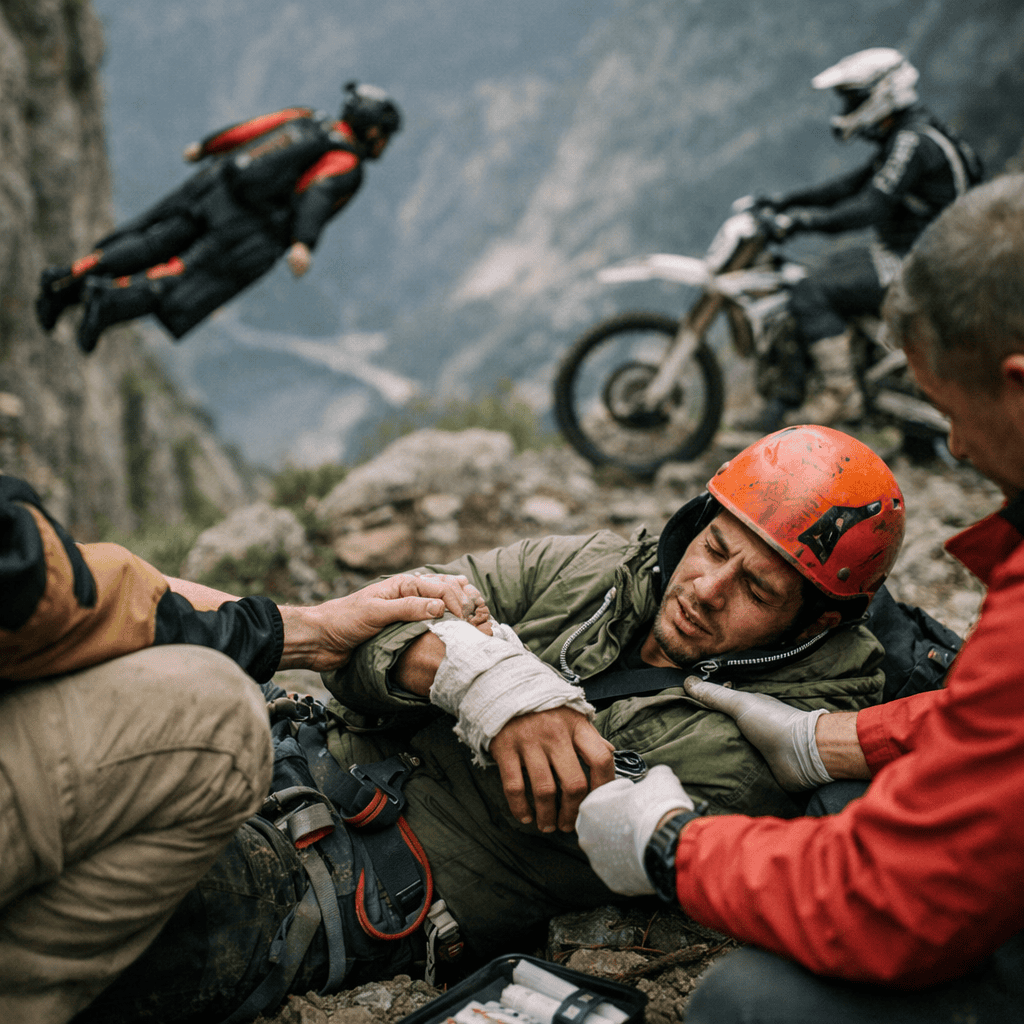
Another major cost driver is rescue logistics. Many extreme sports happen in places that cannot be reached quickly by ambulance. Search and rescue operations may involve helicopters, specialist teams, and coordination across agencies, and these expenses can escalate rapidly. From an insurance perspective, the difference between an accident in a city and one on a remote cliff face is often measured in tens of thousands of dollars.
How Travel Insurance And Adventure Sports Cover Typically Works
Many travellers assume their standard travel insurance will cover accidents during a high-risk activity, but that is often not the case. Extreme sports may be excluded as “hazardous activities” unless an adventure sports add-on is purchased. Coverage can hinge on details such as whether the activity was guided, whether the participant followed recognized safety protocols, and whether the activity was legal and permitted in the location where it occurred.
It’s also common for policies to differentiate between recreational participation and competitive participation. An organized competition, sponsored event, or paid performance may require a different policy entirely. Additionally, coverage may be limited if the athlete is operating outside certified limits—for example, diving beyond a certain depth, climbing without approved safety measures, or jumping in prohibited zones.
Key Policy Clauses To Watch For Before You Participate
Before committing to any high-risk sport, it’s wise to read policy documents carefully. Important clauses include exclusions for extreme sports, altitude limits for trekking or mountaineering, depth limits for scuba diving, and restrictions tied to licensing or supervision. Some policies specify that coverage applies only when using a licensed operator or certified guide. Others may exclude claims if drugs or alcohol were involved, even in small amounts. Pre-existing medical conditions can also affect claims, particularly for altitude and cardiovascular-related incidents.
Medical evacuation benefits deserve special attention. A policy may cover hospital bills but provide limited evacuation support, which can leave a gap when the biggest immediate cost is extraction from a remote environment. Look for clear language about helicopter rescue, mountain rescue, repatriation, and transport to the nearest appropriate medical facility—not only the nearest facility.
Insurance Planning Tips For Extreme Sports Enthusiasts
If you plan to try an activity considered among the most dangerous extreme sports, match your insurance to your actual itinerary and risk level. Choose coverage that explicitly lists your sport, includes emergency rescue and medical evacuation, and is valid in the specific country or region where you will participate. If you’re taking lessons or going with a tour operator, ask for their insurance requirements and confirm whether their coverage is primary or secondary to yours.
It can also help to document your preparedness. Keeping proof of certifications, guided bookings, and equipment checks may support a claim later if the insurer requests evidence that you followed safety procedures. And if you engage in these sports regularly, consider specialized annual coverage designed for adventure athletes rather than relying on one-off travel policies.
Balancing Thrill With Responsibility
The Sports Web Daily breakdown of dangerous extreme sports is a reminder that risk is part of the appeal—but unmanaged risk can lead to devastating outcomes. Whether you’re watching big wave sets roll in, preparing for a high-altitude climb, or considering an aerial sport, the smartest approach is to treat insurance as essential gear. The right coverage won’t prevent an accident, but it can prevent a financial disaster and ensure you have access to timely rescue and proper medical care.
You can explore the full article here: https://sportswebdaily.com/most-dangerous-extreme-sports/