Choosing The Right Cut For The Perfect Steak
Cooking the perfect steak starts long before you turn on the heat. The first step is selecting a cut that matches your preferred texture, flavor, and cooking method. Well-marbled steaks such as ribeye are prized for their buttery tenderness and rich taste because intramuscular fat melts as it cooks. Leaner cuts like filet mignon deliver exceptional tenderness with a milder flavor, while strip steak (New York strip) offers a balanced middle ground: robust beefiness with a satisfying chew. If you love bold flavor and don’t mind a slightly firmer bite, sirloin can also be a fantastic option.
Thickness matters just as much as cut. A thicker steak (around 1 to 1.5 inches) is easier to cook to a precise doneness because it allows you to build a beautiful crust without overcooking the interior. When you begin with a great cut, you set yourself up for steakhouse-worthy results at home.
Bring Steak To Room Temperature Before Cooking
One of the most practical tips for making the perfect steak is to let it rest at room temperature before it hits the pan or grill. When a steak goes straight from the fridge to high heat, the outside can cook too quickly while the center remains cold and underdone. Allowing the steak to sit out briefly promotes more even cooking and helps you achieve that ideal contrast between a caramelized exterior and a juicy interior.
Patience here pays off. While the steak comes closer to room temp, you can also prepare your cooking surface, seasonings, and any finishing elements (like butter, herbs, or a quick pan sauce) so everything is ready when the sear begins.
Season Simply, But Season Well
Seasoning is where many home cooks either overcomplicate things or underdo them. For a truly perfect steak, simple is often best. A generous amount of kosher salt and freshly cracked black pepper highlight the natural flavor of the beef and help build that craveable crust. Salt also plays a functional role by drawing moisture to the surface, which then evaporates during cooking and encourages browning.
If you want to add extra depth, complementary flavors like garlic, rosemary, thyme, or a touch of smoked paprika can elevate the experience without masking the steak’s character. The key is to treat seasoning as a support act, not the main event.
Use High Heat To Create A Gorgeous Crust
The hallmark of a perfect steak is the contrast: a browned, flavorful crust on the outside and a tender, juicy center inside. This is where high heat becomes essential. Whether you’re using a cast-iron skillet, stainless steel pan, or a hot grill, the surface needs to be properly preheated so the steak sears immediately upon contact.
A strong sear triggers the Maillard reaction, which creates complex, savory flavors and deep browning. To maximize this effect, avoid overcrowding the pan and don’t move the steak too much early on. Let it sit and develop color before flipping. If you’re cooking multiple steaks, sear in batches to maintain heat and ensure each steak gets the crust it deserves.
Choose The Best Cooking Method For Your Kitchen
There are several reliable ways to cook steak, and the “best” method depends on your tools and comfort level. Pan-searing is ideal for strong crust development and control, especially with cast iron. Grilling adds smoky flavor and dramatic char marks. Broiling can also work beautifully, particularly if you want intense top-down heat similar to a restaurant salamander.
Many cooks combine methods for more control. For example, you can sear on the stovetop and finish in the oven to gently bring the interior to the desired temperature. This approach is especially useful for thicker cuts and helps prevent burning the exterior while you wait for the center to cook.
Know Doneness And Use A Meat Thermometer
If you want consistent results, temperature is your best friend. Visual cues can be helpful, but they can also be misleading depending on steak thickness, cooking method, and lighting. A meat thermometer takes the guesswork out of the process and helps you nail the doneness you prefer every time.
As a rough guide, rare steak is typically pulled around 120–125°F, medium-rare around 130–135°F, medium around 140–145°F, and medium-well around 150–155°F (temperatures will rise slightly during resting). If you love a steak that’s juicy, tender, and flavorful, medium-rare is often considered the sweet spot, but the perfect doneness is ultimately the one you enjoy most.
Let The Steak Rest For Maximum Juiciness
Resting is not optional if you’re chasing the perfect steak. After cooking, the steak’s juices are pushed toward the surface because of the heat. If you cut into it immediately, those juices spill out onto the cutting board instead of staying in the meat. A short rest allows the fibers to relax and the juices to redistribute, resulting in a more succulent bite.
Resting time depends on size, but even a few minutes makes a noticeable difference. During this time, you can tent the steak lightly with foil, but avoid wrapping tightly, which can trap steam and soften the crust you worked so hard to create.
Finish With Butter, Herbs, And Simple Steakhouse Touches
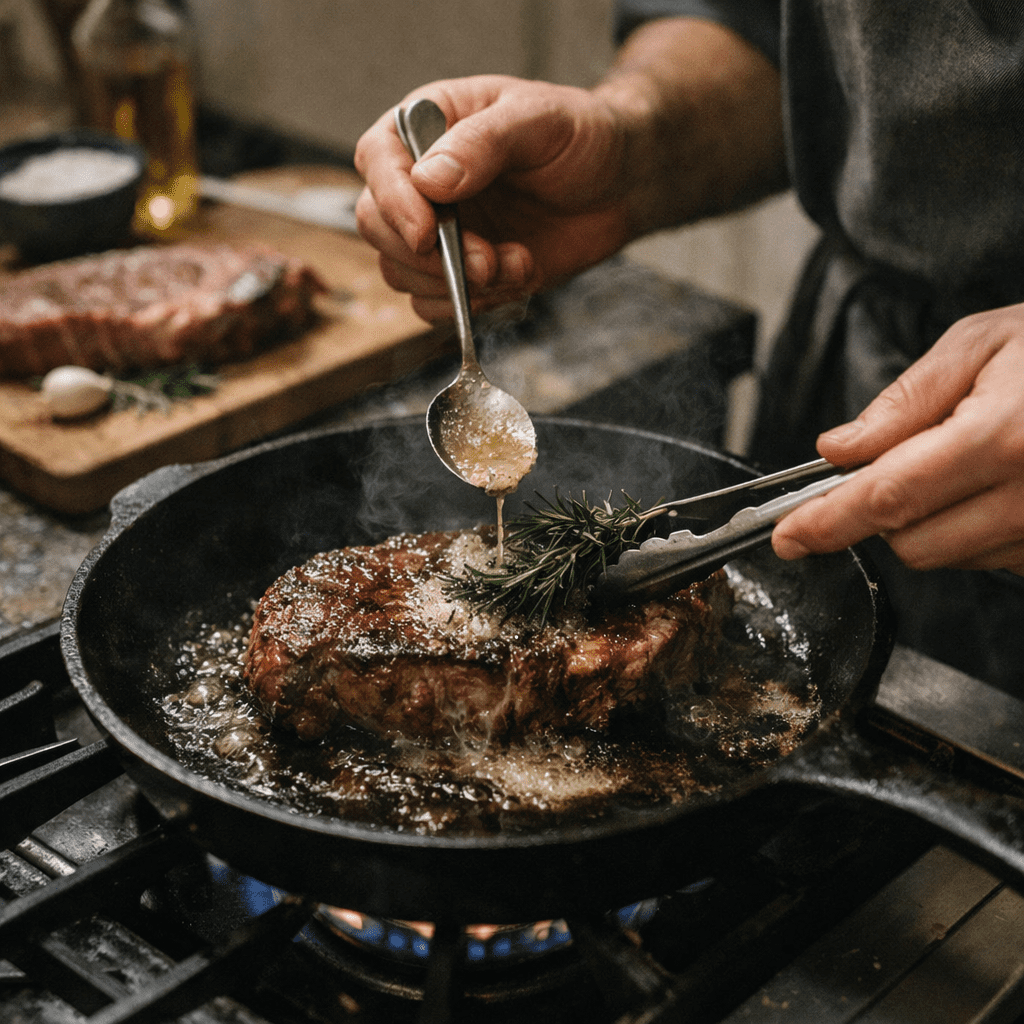
A great finishing step can turn a good steak into a memorable one. Many steakhouse-style techniques are surprisingly easy at home. One popular method is basting: adding butter to the pan during the final minutes of cooking along with aromatics like garlic and fresh herbs, then spooning the foaming butter over the steak to build flavor and shine.
You can also finish with a sprinkle of flaky salt for texture, a squeeze of lemon to brighten richness, or a quick pan sauce made from drippings. These finishing touches don’t need to be complicated—they simply enhance what’s already there: high-quality beef cooked with care.
Slice Correctly And Serve With Confidence
Even after you’ve cooked the steak perfectly, slicing can affect tenderness. For cuts with more pronounced grain, slicing against the grain shortens muscle fibers and makes each bite easier to chew. Use a sharp knife, slice cleanly, and serve immediately after resting so the steak is warm, juicy, and at its peak.
Pair your steak with classic sides like roasted potatoes, crisp salad, grilled vegetables, or a simple chimichurri. With the right cut, strong heat, proper seasoning, accurate temperature, and a well-timed rest, you’ll consistently deliver steak that tastes like it came from a high-end restaurant.
You can explore the full article by going to this link: https://www.liftbump.com/tips-to-make-the-perfect-steak/.