Is It Possible To Loose Weight Through Pilates?
Pilates has a reputation for building long, lean muscles, improving posture, and strengthening the core—but many people also wonder whether it can support real, measurable fat loss. The short answer is yes: it is possible to lose weight through Pilates, especially when it’s practiced consistently and paired with smart lifestyle habits. However, understanding how Pilates affects calorie burn, metabolism, muscle tone, and overall body composition is key to setting realistic expectations and getting results.
Unlike some high-intensity workouts that prioritize sweat and speed, Pilates focuses on controlled movement, alignment, breathing, and full-body strength. That doesn’t mean it’s “easy”—it just works differently. Weight loss through Pilates is often a combination of increased activity, improved strength and muscle engagement, better movement patterns, and the ability to train more consistently without burnout or injury.
How Pilates Supports Weight Loss
Weight loss happens when your body uses more energy than it consumes over time. Pilates contributes to this process in several ways. First, it increases your daily energy expenditure—especially when practiced multiple times per week. While a single session may burn fewer calories than running or cycling, consistent Pilates can still create a meaningful impact, particularly for beginners or those returning to exercise after a break.
Second, Pilates builds muscle. More lean muscle mass can modestly raise your resting metabolic rate, meaning your body may burn slightly more calories throughout the day. It also improves athletic efficiency and joint stability, which can make it easier to add other types of activity—like walking, strength training, or cardio—without pain or dysfunction. For many people, that ripple effect is where Pilates becomes a powerful tool for weight management.
Calories Burned: What To Expect From Pilates
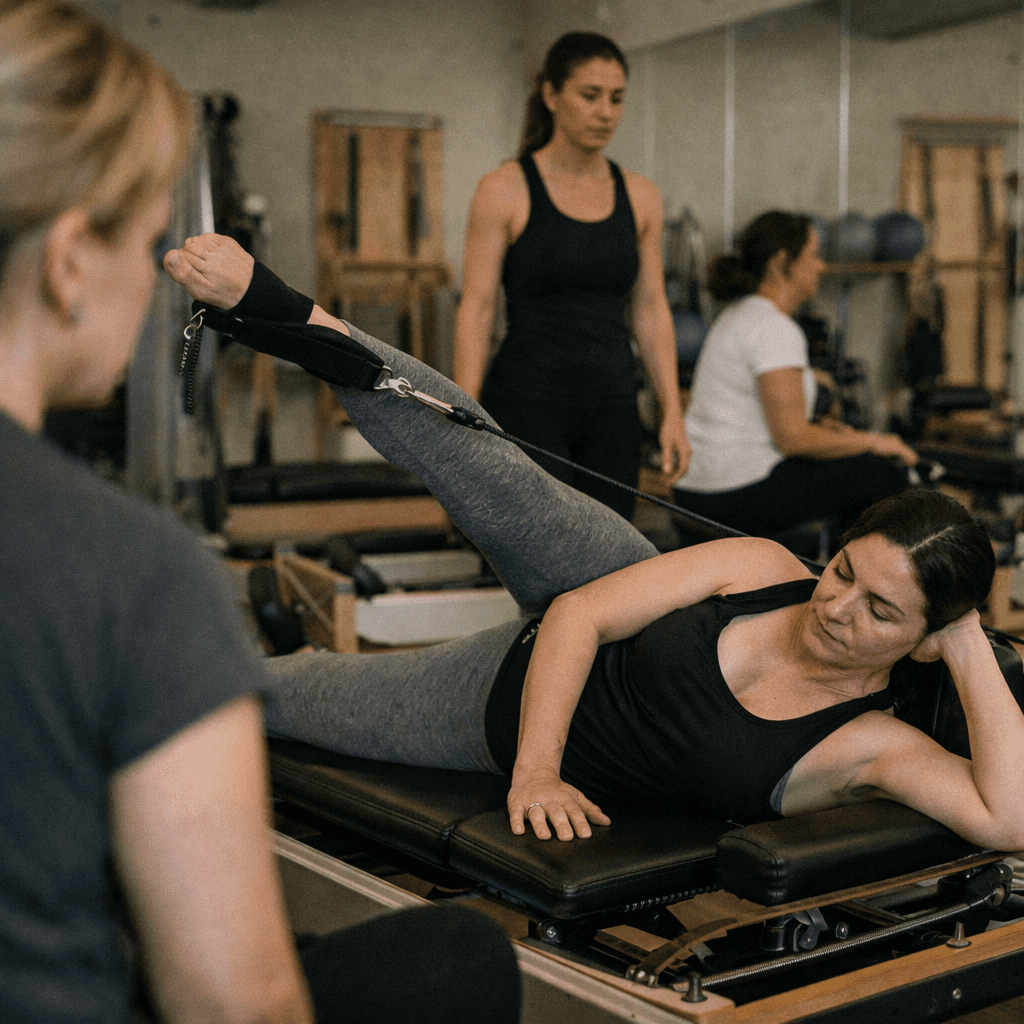
Calorie burn during Pilates depends on factors like workout intensity, duration, fitness level, and whether you’re doing mat Pilates or reformer Pilates. A gentle, beginner-friendly mat session will usually burn fewer calories than a faster-paced power Pilates class or a challenging reformer workout that uses resistance and tempo changes.
While Pilates might not match the calorie burn of a high-intensity interval training (HIIT) session minute-for-minute, it can still be effective because it’s often more sustainable. Many people can practice Pilates more frequently, recover faster, and maintain consistency—three essentials for long-term results. If your goal is weight loss, aim for progressive sessions (where the challenge gradually increases) rather than repeating the same easy routine indefinitely.
Fat Loss Vs. “Toning”: Understanding The Difference
One reason Pilates is associated with “toning” is that it strengthens muscles and improves posture, which can change how your body looks even before the scale moves significantly. Pilates can tighten and define muscle groups—especially the core, glutes, hips, back, and thighs—creating a more sculpted appearance.
That said, “toning” doesn’t replace fat loss. If body fat is covering muscle definition, you may not see dramatic visual changes until you reduce overall body fat percentage. Pilates supports that goal, but nutrition, overall activity levels, sleep quality, and stress management also strongly influence fat loss.
Why Pilates Is Great For Sustainable Results
Pilates is low-impact, joint-friendly, and highly adaptable. This makes it ideal for people who struggle with intense workouts, have previous injuries, or feel overwhelmed by traditional gym routines. Because Pilates emphasizes alignment and controlled movement, it can improve mobility and reduce aches that might otherwise limit your ability to exercise regularly.
It also builds core stability and body awareness, which can improve performance in other training styles. Many people find that once they develop better movement mechanics through Pilates, they feel stronger and more confident adding walking, cycling, swimming, resistance training, or classes that elevate heart rate. Sustainable weight loss is rarely about one “perfect” workout—it’s about combining activities you can stick with.
How Often Should You Do Pilates To Lose Weight?
If weight loss is your goal, frequency matters. Many people see the best results with Pilates 3–5 times per week, depending on intensity and recovery. Shorter sessions done consistently often work better than occasional long workouts.
To keep progressing, vary your training: mix classic mat Pilates with reformer sessions, incorporate faster-paced flows when appropriate, and increase resistance or complexity over time. You can also combine Pilates with low-intensity cardio (like brisk walking) to boost calorie burn without stressing your joints.
Boost Weight Loss With Smart Pairings
Pilates can be a central part of a weight-loss plan, but it works even better when supported by complementary habits:
1) Add Daily Movement: If you do Pilates a few times per week, increasing daily steps can accelerate fat loss. Walking is particularly effective for steady calorie burn and recovery.
2) Include Strength And Resistance: Reformer Pilates already offers resistance, but you can also add light dumbbells, bands, or strength sessions to further build muscle and improve body composition.
3) Prioritize Nutrition: A calorie deficit created through balanced eating is often the deciding factor in weight loss. Focus on protein, fiber-rich carbs, healthy fats, and consistent hydration to support training and recovery.
4) Manage Stress And Sleep: Pilates naturally encourages breath control and nervous system regulation. Better sleep and lower stress can improve appetite regulation and training consistency—both crucial for fat loss.
Who Benefits Most From Pilates For Weight Loss?
Pilates can support weight loss for almost anyone, but it’s especially beneficial for people who want a low-impact approach, those who are new to exercise, or anyone who needs a safe way to build strength while improving posture and flexibility. It can also be an excellent option for people who dislike high-impact cardio or who need a more mindful, technique-driven workout style.
It’s also important to note that weight loss is not the only marker of progress. Many Pilates practitioners experience improved energy, stronger cores, fewer back pains, better balance, and visible changes in posture and muscle definition—benefits that can reinforce healthy habits and make long-term weight management easier.
Conclusion: Pilates Can Help You Lose Weight—With The Right Strategy
So, is it possible to lose weight through Pilates? Yes—especially when Pilates is practiced consistently, progressed over time, and paired with supportive nutrition and lifestyle habits. While Pilates may not always be the fastest calorie-burning workout, it can drive meaningful body composition changes by building muscle, improving movement quality, and helping you stay active without injury.
If you want a method that strengthens your entire body, supports long-term consistency, and helps you feel better while working toward a leaner shape, Pilates can be a smart and sustainable choice.
You can explore the full article by going to this link: https://wildaboutbeauty.com/is-it-possible-to-lose-weight-through-pilates/.