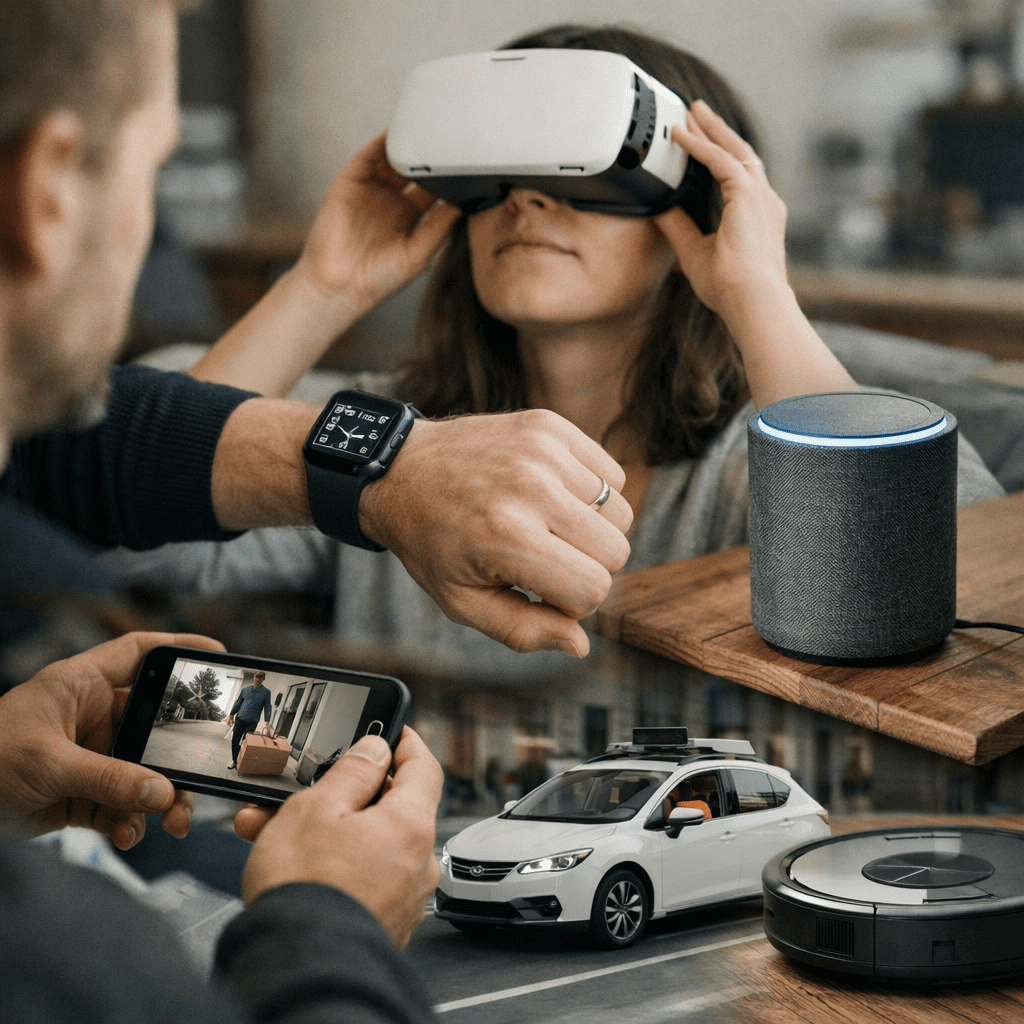
Smart Technology Is Transforming Everyday Life
Smart technologies are rapidly reshaping how people live, work, travel, and protect what matters most. From intelligent healthcare tools to connected homes and AI-driven environments, modern solutions are increasingly designed to learn from user behavior, automate routine tasks, and deliver real-time insights. The result is a world where convenience improves, decision-making becomes faster, and systems become more efficient and responsive. The article “Top 5 smart technologies” highlights some of the most impactful innovations driving this shift and explains why they deserve attention from consumers and businesses alike.
In this guest post, we’ll explore five leading smart technologies that are redefining daily experiences: smart home systems, wearable health tech, smart transportation, artificial intelligence, and smart security. Each of these areas offers practical benefits today while paving the way for a more connected, data-informed future.
1) Smart Home Technology For Comfort And Efficiency
Smart home technology has become one of the most visible examples of intelligent innovation. By connecting devices through Wi-Fi, Bluetooth, and IoT platforms, homeowners can control lighting, temperature, appliances, and entertainment systems from a smartphone or via voice assistants. Smart thermostats can learn your schedule, adjust heating and cooling automatically, and reduce unnecessary energy use. Smart lighting can be scheduled, motion-activated, or controlled remotely, supporting both convenience and security.
Beyond comfort, smart home systems can help optimize energy consumption and improve accessibility. For families, automation reduces repetitive tasks. For older adults or people with mobility challenges, voice control and routine automations can make daily living easier. As interoperability improves across platforms, smart homes are moving from “nice-to-have” gadgets to integrated ecosystems that support modern lifestyles.
2) Wearable Devices And Smart Health Monitoring
Wearable technology is playing an increasingly important role in personal health and wellness. Devices like smartwatches and fitness trackers can monitor heart rate, activity levels, sleep patterns, blood oxygen levels, and more—often in real time. This constant flow of data helps users better understand their bodies and adjust habits, from improving sleep consistency to increasing daily movement.
Smart health monitoring can also support preventive care. Many wearables generate alerts when unusual patterns are detected, encouraging users to take early action. When combined with health apps, wearable devices can provide trends over weeks or months, helping people set goals and track progress. For healthcare systems, wearable-generated data (when shared safely and with consent) may enhance remote monitoring and follow-up care, reducing strain on clinics while keeping patients informed and engaged.
3) Smart Transportation And Connected Mobility
Transportation is evolving quickly with smart technologies that make travel safer, more efficient, and increasingly automated. Connected mobility includes features such as GPS-based route optimization, real-time traffic data, smart parking solutions, and vehicle-to-device connectivity. For drivers, these tools reduce commuting stress by suggesting faster routes, warning about congestion, and improving navigation accuracy.
Smart transportation also extends into advanced driver assistance and the broader push toward autonomous vehicles. While fully autonomous systems are still developing, many vehicles already include intelligent safety features like lane assistance, collision warnings, adaptive cruise control, and parking support. Cities are also embracing smart mobility through traffic signal optimization and sensor-based monitoring that helps manage flow and reduce idle time. These innovations can contribute to lower emissions, improved road safety, and a more organized urban transport experience.
4) Artificial Intelligence And Machine Learning In Daily Use
Artificial intelligence (AI) and machine learning are at the core of many smart technologies, powering systems that can recognize patterns, learn preferences, and make recommendations. AI is already embedded in search engines, digital assistants, customer support chatbots, banking fraud detection, personalization algorithms, and content recommendations. In everyday terms, AI helps make experiences smoother—suggesting what you might want to watch, predicting what you might type next, or filtering spam and suspicious activity before it reaches you.
For businesses, AI-driven tools can streamline operations, improve customer service responsiveness, and support decision-making with predictive insights. In sectors like healthcare, finance, retail, and logistics, machine learning models can process large datasets quickly to reveal trends people would likely miss manually. As AI becomes more accessible, it is enabling smarter automation at scale—reducing time spent on repetitive tasks and allowing teams to focus on higher-value work.
5) Smart Security Systems For Safer Homes And Businesses
Smart security has become a critical application of connected technology, offering protection that goes beyond traditional alarms. Today’s smart security systems can include video doorbells, motion sensors, smart locks, surveillance cameras with mobile access, and real-time alerting. Many systems allow users to monitor their property remotely, receive notifications when movement is detected, and store footage securely for later review.
What makes smart security especially valuable is its combination of automation and awareness. Users can set custom rules—for example, turning on outdoor lights when motion is detected after a certain time, or receiving alerts if a door is unlocked unexpectedly. Some solutions also incorporate AI-based detection to reduce false alarms by distinguishing between people, vehicles, and animals. Whether for residential use or commercial properties, smart security tools offer stronger visibility and faster response capabilities.
Why These Smart Technologies Matter In 2026 And Beyond
The common thread across these innovations is intelligent connectivity. Smart technologies collect data, communicate across devices, and respond dynamically to user needs. As a result, people are seeing tangible improvements in convenience, health awareness, safety, and productivity. These systems also support broader goals such as energy efficiency, resource optimization, and improved public infrastructure through smarter planning and real-time monitoring.
At the same time, it’s wise to consider digital responsibility as adoption increases. Users should prioritize reputable brands, strengthen account security with strong passwords and multi-factor authentication, and review privacy settings to understand what data is being collected and how it is used. With the right balance of innovation and safety, smart technology can deliver meaningful benefits without compromising trust.
Final Thoughts On The Top Smart Technology Trends
From smart homes and wearable health devices to AI-powered services, connected transportation, and modern security systems, these five smart technologies represent real-world improvements that are already influencing daily life. They help automate tasks, improve decision-making through data, and create environments that adapt to users rather than requiring constant manual control. For anyone interested in the future of innovation, these areas are worth watching—and adopting—strategically.
They can explore the full article by going to the following link: https://digitalsoftmedia.com/top-5-smart-technologies/