Understanding Dry Aging Explained
Dry aging is one of the most respected techniques in the meat world because it transforms great beef into something deeper, richer, and more tender. If you’ve ever wondered why a dry-aged steak tastes “nutty,” “buttery,” or intensely beefy, the answer lies in controlled time, airflow, and careful trimming. This dry aging explained guide breaks down what happens during the aging process, what makes it different from other methods, and why it has become a hallmark of premium steakhouses and serious home cooks alike.
At its core, dry aging is the practice of storing large cuts of beef in a carefully controlled environment so natural enzymes can tenderize the meat and moisture can evaporate, concentrating flavor. The process is not about “drying out” a steak in the negative sense—it’s about creating the ideal conditions for improvement while preventing spoilage. When done correctly, the result is a steak with a more complex aroma, a more concentrated beef flavor, and a more luxurious texture.
What Happens During The Meat Aging Process
The magic of dry-aged beef comes from two main changes: enzymatic tenderization and moisture loss. In the first stage, enzymes already present in the muscle begin breaking down connective tissues. This is why aged steak often feels softer and more yielding. Over time, these enzymes help enhance tenderness without needing marinades or mechanical tenderizing.
The second change is evaporation. As the meat sits in a controlled environment, some water content escapes. Less moisture means a higher concentration of fats, proteins, and flavor compounds per bite. This is a big reason dry-aged beef tastes more intense than standard supermarket cuts.
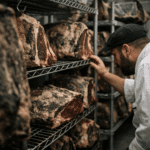
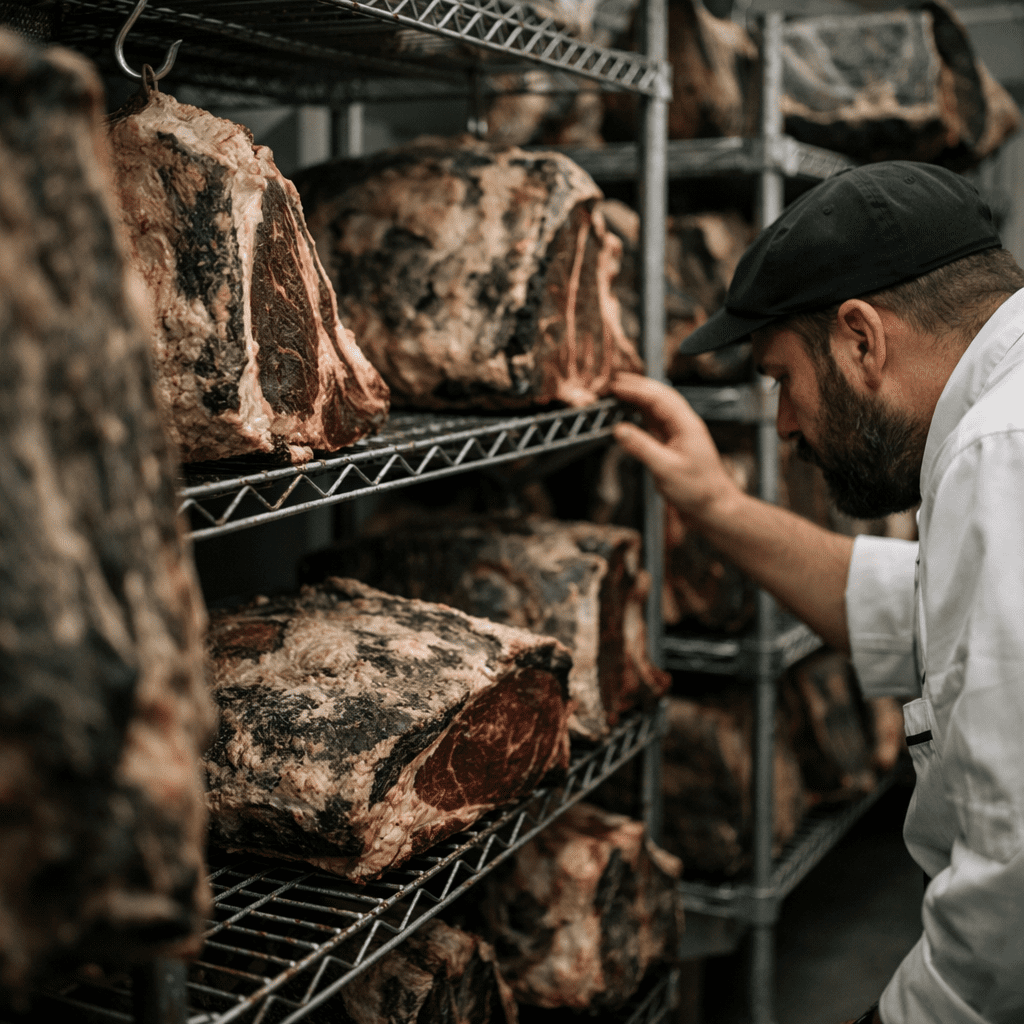
Another notable part of the process is the development of a dark exterior crust. This outside layer dries and oxidizes, and it may also host beneficial surface mold in professional settings—similar in concept to certain cured foods. That crust is typically trimmed away before cutting steaks, revealing the vibrant, richly colored interior that dry-aging fans love.
Dry Aging Vs. Wet Aging: Key Differences
When comparing dry aging vs wet aging, the biggest difference is the environment. Wet aging is done in vacuum-sealed plastic, usually for a shorter period, and it’s the most common aging method used in large-scale distribution. Wet aging can improve tenderness, but it doesn’t create the same concentrated flavor because moisture does not evaporate in the sealed bag.
Dry aging, by contrast, requires open-air exposure within very specific parameters. It takes longer, costs more, and leads to trimming losses—yet offers a unique flavor profile that many describe as more “steakhouse-like.” If your priority is bold flavor complexity, dry aging tends to win. If you want simple tenderness improvements with minimal cost increase, wet aging is more accessible.
Best Cuts For Dry Aging At Home Or In A Butcher Shop
Not every cut is ideal for dry aging. In general, large primal cuts with a protective fat cap perform best because the outer layer shields the interior during aging and gives you more usable meat after trimming. Rib and strip loins are classic dry-aging candidates because they are thick, evenly shaped, and naturally suited to being cut into steaks after aging.
Bone-in sections can also be aged, and many people believe bones add protection and help preserve moisture in the interior. Regardless of bone-in or boneless, the “bigger is better” rule usually applies: dry aging individual steaks at home is far more difficult to do safely and effectively than aging a full subprimal. The more surface area relative to volume, the more trimming waste you’ll face.
Ideal Temperature, Humidity, And Airflow For Dry Aging
Safe, successful dry aging depends on tight environmental control. Temperature must remain cold enough to slow harmful bacterial growth while still allowing enzymatic action to continue. Humidity plays a major role in preventing the exterior from becoming too dry too quickly or, on the other hand, becoming overly moist and prone to spoilage. Airflow is equally important because it helps manage surface moisture and promotes the formation of the protective crust.
Professional dry-aging rooms and specialized aging fridges maintain these factors with precision. For home dry aging, many cooks turn to purpose-built aging bags or dedicated refrigerators to reduce risk and improve consistency. Whichever method you choose, the goal remains the same: controlled drying, not uncontrolled dehydration.
How Long To Dry Age Beef For The Best Flavor
Dry-aging time influences both taste and texture. Shorter aging periods tend to emphasize tenderness improvements, while longer aging pushes flavor into more pronounced territory. Many people consider the 21–30 day range a sweet spot for noticeable changes without becoming too intense. As aging continues beyond that, flavor can shift into funkier, more assertive notes that certain steak lovers actively seek out.
There’s no universal “best” time, because preference matters. If you’re new to dry-aged steak, starting with a moderately aged cut is often a smart way to learn what you like. If you already enjoy bold, complex flavors, you may prefer longer aging periods that showcase deeper nuttiness and umami intensity.
Why Dry-Aged Beef Costs More
Dry-aged beef is more expensive for several practical reasons. First, time is money: storing beef for weeks takes space and careful monitoring. Second, weight loss occurs due to evaporation, meaning the final product yields fewer sellable pounds. Third, the outer crust must be trimmed, which further reduces yield. When you combine storage costs, shrinkage, trimming losses, and expertise, the premium price makes sense.
That said, understanding dry aging explained in a clear way helps you evaluate value. You’re not paying for hype—you’re paying for a controlled transformation that produces a distinct eating experience.
Cooking Tips For Dry-Aged Steak
Because dry-aged beef is more concentrated in flavor, it often benefits from simpler seasoning. Salt and pepper are usually enough, letting the steak’s natural complexity shine. Many cooks also prefer slightly gentler cooking approaches to avoid masking nuanced aromas—though a great sear is still essential for crust and texture.
It’s also worth remembering that dry-aged steaks can cook a bit faster, especially if they’ve lost more moisture. Using a thermometer and resting the meat properly will help you preserve juiciness and keep the texture tender.
Final Thoughts On Dry Aging Explained
Dry aging is equal parts science, craft, and patience. When handled correctly, it creates a steak with elevated tenderness and a signature depth of flavor you can’t replicate with quick tricks. Whether you’re deciding between wet aging vs dry aging, choosing the best cuts for dry aging, or learning how long to dry age for your preferred taste, understanding the fundamentals makes you a smarter buyer and a better cook.
You can explore the full article by going to the following link: https://www.foodwellsaid.com/meat-aging-explained/