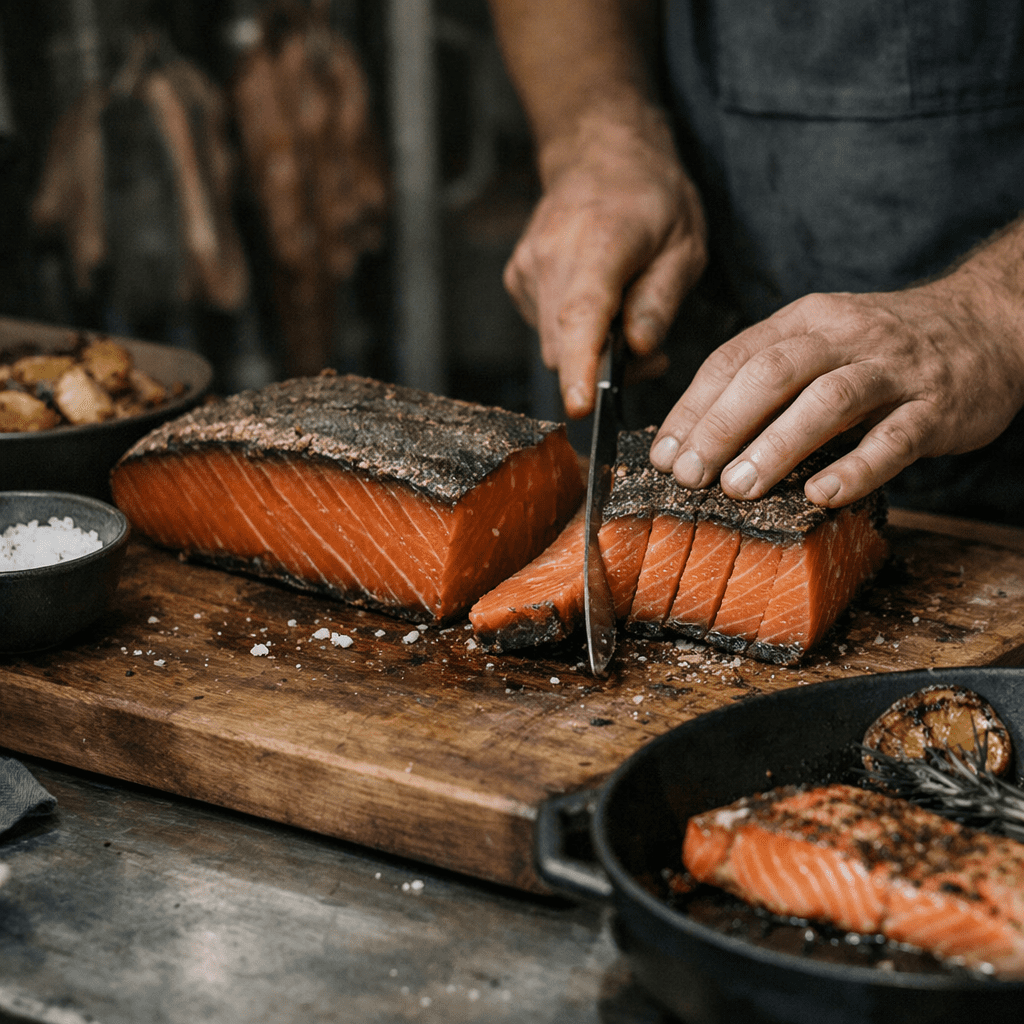
Dry aged salmon has quickly become a standout technique for home cooks who love bold flavor, silky texture, and restaurant-level results without complicated equipment. Popularized by high-end kitchens and now widely embraced by curious food enthusiasts, this method uses a simple salt-and-sugar cure and controlled refrigeration to transform fresh salmon into something deeper, firmer, and more luxurious. If you’ve been searching for a dry aged salmon recipe that’s achievable at home, this overview explains what to expect, why it works, how to serve it, and how to get the best results from your next fish purchase.
What Makes Dry Aged Salmon So Special
Unlike hot smoking or cooking, dry aging focuses on removing excess moisture and amplifying natural flavors. The process tightens the flesh, concentrates richness, and creates a texture that’s both tender and sliceable. Think of it as the seafood cousin of dry-aged beef: time and controlled conditions do a lot of the work. While salmon is already flavorful, dry aging elevates it—enhancing umami, smoothing out any “watery” notes common in lesser cuts, and producing a clean, refined taste that works beautifully in everything from brunch plates to elegant appetizers.
How The Dry Aging Process Works
At its core, dry aging salmon relies on a cure—typically salt combined with sugar—to draw out moisture via osmosis. As water leaves the fish, flavor becomes more concentrated, and the salmon’s surface forms a slightly tacky pellicle-like layer that helps set the final texture. In addition, the time spent resting in the fridge allows the cure to penetrate evenly, gently seasoning the fish throughout rather than merely on the exterior. The result is a balanced, savory-sweet profile (not sugary), with a firm but delicate bite.
Choosing The Best Salmon For Dry Aging
Quality matters more here than in many cooked salmon recipes because the fish won’t be heat-treated. Start with the freshest salmon you can source, ideally sushi-grade or explicitly labeled for raw consumption by a trusted fishmonger. Look for vibrant color, a clean ocean smell (never “fishy”), and firm flesh. Center-cut fillets tend to age most evenly because thickness is more consistent. Avoid salmon that looks dull, overly wet, or has browning edges. If pin bones remain, they can be removed with clean tweezers for a smoother slicing and serving experience.
Key Ingredients And Tools You’ll Need
A dry aged salmon recipe is refreshingly minimalist. The essential ingredients are salt and sugar, used in a measured balance to cure without overwhelming. Some cooks add aromatics such as cracked pepper, dill, citrus zest, or a touch of smoked salt for complexity, but the foundation remains the cure itself. Helpful tools include paper towels, a rimmed tray to catch any liquid, and a wire rack or breathable setup that allows air to circulate around the fish. Good airflow in the refrigerator is important, as it helps the surface dry properly and prevents the salmon from sitting in its own moisture.
Step-By-Step Overview Of The Method
Dry aging salmon is straightforward: you coat the fish with the salt-sugar cure, rest it under refrigeration, and then rinse and dry it before a final chill. During the cure time, liquid will be drawn out—this is normal. After curing, rinsing removes excess surface cure, and drying with paper towels helps achieve that refined, sliceable finish. A final rest in the fridge improves texture even more, yielding salmon that cuts cleanly and feels pleasantly dense without being tough. The full process is simple enough for a weekend project and impressive enough for entertaining.
Flavor, Texture, And What To Expect When It’s Done
Finished dry aged salmon tastes richer and more intense than raw salmon, yet still clean and fresh when properly prepared. The texture becomes firmer and silkier, similar to lightly cured gravlax but often denser and more “aged” in character. You’ll notice cleaner slices, less weeping on the plate, and a pronounced salmon-forward flavor that stands up well to acidic garnishes like lemon, capers, or quick-pickled onions. This concentrated profile is the reason it works so well in simple presentations—because it doesn’t need much to shine.
Serving Ideas For Dry Aged Salmon
One of the best parts about making dry aged salmon is its versatility. Serve thin slices on toasted sourdough with cream cheese, fresh dill, and a squeeze of lemon for a luxurious breakfast or brunch. Plate it as an appetizer with cucumber ribbons, microgreens, and a light drizzle of olive oil. It also works beautifully over warm rice with soy sauce, scallions, and sesame—just keep the rice warm, not hot, so you don’t alter the texture. For a low-carb option, pair it with avocado, radish, and a citrusy salad. Because the salmon is already deeply seasoned, keep accompanying ingredients bright and simple.
Food Safety And Storage Considerations
Because this is a cured, not cooked, salmon preparation, food safety should be taken seriously. Always start with high-quality fish intended for raw consumption, keep everything cold, and use clean surfaces and utensils. Cure and store the salmon in the refrigerator at a stable, cold temperature, and avoid leaving it at room temperature for extended periods. Once finished, store it tightly wrapped and consume within a reasonable timeframe for best quality. If anything smells off, looks unusually discolored, or feels overly slimy, discard it. With proper sourcing and handling, dry aged salmon can be a safe and rewarding kitchen project.
Tips For Better Results Every Time
For consistent dry aging, prioritize uniform thickness so the cure works evenly. Pat the fish dry before curing, and don’t skip the post-rinse drying step—removing surface moisture is key for that professional finish. If you’re adding herbs or citrus zest, use them thoughtfully so they complement rather than mask the salmon’s natural flavor. Finally, slice with a very sharp knife, using smooth, confident strokes. Thin slices enhance the experience, highlighting the salmon’s dense, silky texture and making each bite feel intentional and refined.
Why This Recipe Is Worth Trying At Home
Dry aging salmon bridges the gap between everyday cooking and special-occasion dining. It’s a technique that feels impressive yet relies on basic ingredients and patience rather than fancy gear. Whether you love Scandinavian-style cured fish, enjoy building charcuterie-style seafood boards, or simply want to expand your culinary skills, learning how to make dry aged salmon at home is a delicious upgrade. The result is nuanced, elegant salmon that’s ready to star in simple dishes with minimal effort.
They can explore the full article by going to the following link: https://www.theweekendgateway.com/2021/08/dry-aged-salmon-recipe.html