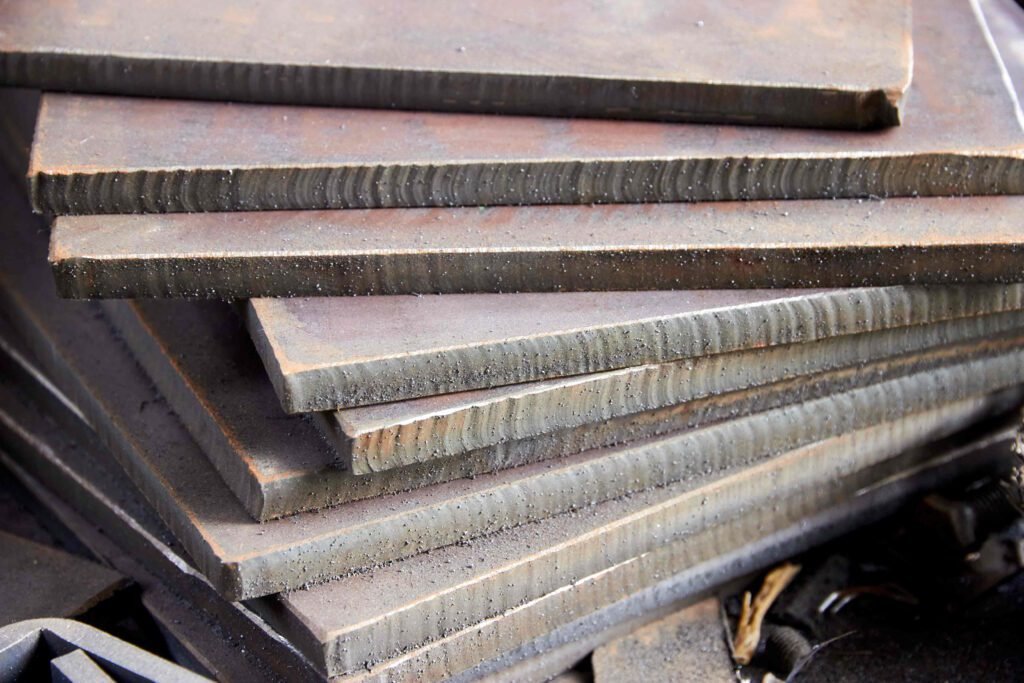
As manufacturers race to innovate and adapt, proven materials remain the quiet foundation of performance, safety and long-term growth.
Speed, innovation and sustainability dominate the industrial agenda. But amid the rush to adopt new technologies and processes, one old-fashioned priority is quietly reasserting itself: material reliability.
In a manufacturing landscape defined by rapid iteration, compressed product lifecycles and globalised supply chains, the pressure to move faster has rarely been greater. Yet as companies chase agility and innovation, the fundamentals of engineering have not changed. Reliable, proven materials remain central to performance, safety and long-term profitability.
That is the clear message from a new analysis published by The Business of Yorkshire, which argues that material quality is becoming more—not less—important as industry evolves.
The piece highlights a growing tension facing manufacturers. On one hand, there is intense pressure to adopt lightweight composites, recycled inputs and novel alloys to meet cost, performance and sustainability targets. On the other, there is the risk that insufficiently tested or poorly specified materials can introduce hidden weaknesses into products and infrastructure.
In sectors such as construction, automotive, aerospace and energy, the consequences of material failure are severe. Delays, recalls, reputational damage and regulatory scrutiny can quickly outweigh any short-term gains achieved through cheaper sourcing or faster deployment. As the article notes, reliability is not a brake on innovation—it is what allows innovation to scale safely.
Supply chain disruption has only sharpened this focus. With manufacturers increasingly forced to diversify suppliers or substitute materials due to geopolitical risk and logistics volatility, ensuring consistency and traceability has become a strategic priority. Businesses that understand the properties, tolerances and long-term behaviour of their materials are better positioned to adapt without compromising quality.
The article also points to the role of testing, certification and standards as enablers rather than obstacles. Independent verification and rigorous quality control are helping firms balance speed with assurance, particularly as digital manufacturing tools and automation accelerate production cycles. In fast-moving environments, problems propagate quickly; robust materials help prevent small issues becoming systemic failures.
Sustainability is another area where reliability matters. Circular economy models depend on materials that can be reused, recycled or repurposed without degradation. Poor-quality inputs undermine these ambitions, increasing waste and lifecycle emissions. Reliable materials, by contrast, support durability, repairability and long-term environmental performance.
For Yorkshire’s manufacturing base—still one of the UK’s most diverse and resilient—the message is especially relevant. Advanced manufacturing, engineering and materials science remain core regional strengths. As firms invest in new technologies, maintaining a disciplined approach to material selection could prove a means of competitive differentiation rather than a constraint.
The rush to innovate is unlikely to slow. But as this analysis makes clear, the fastest businesses in the years ahead will not be those that cut corners on materials, but those that combine speed with substance. In a high-velocity industrial economy, reliability is not a legacy concern—it is a modern necessity.
You can read the original article in full here: https://www.thebusinessofyorkshire.co.uk/why-reliable-materials-still-matter-in-a-fast-moving-industry.html