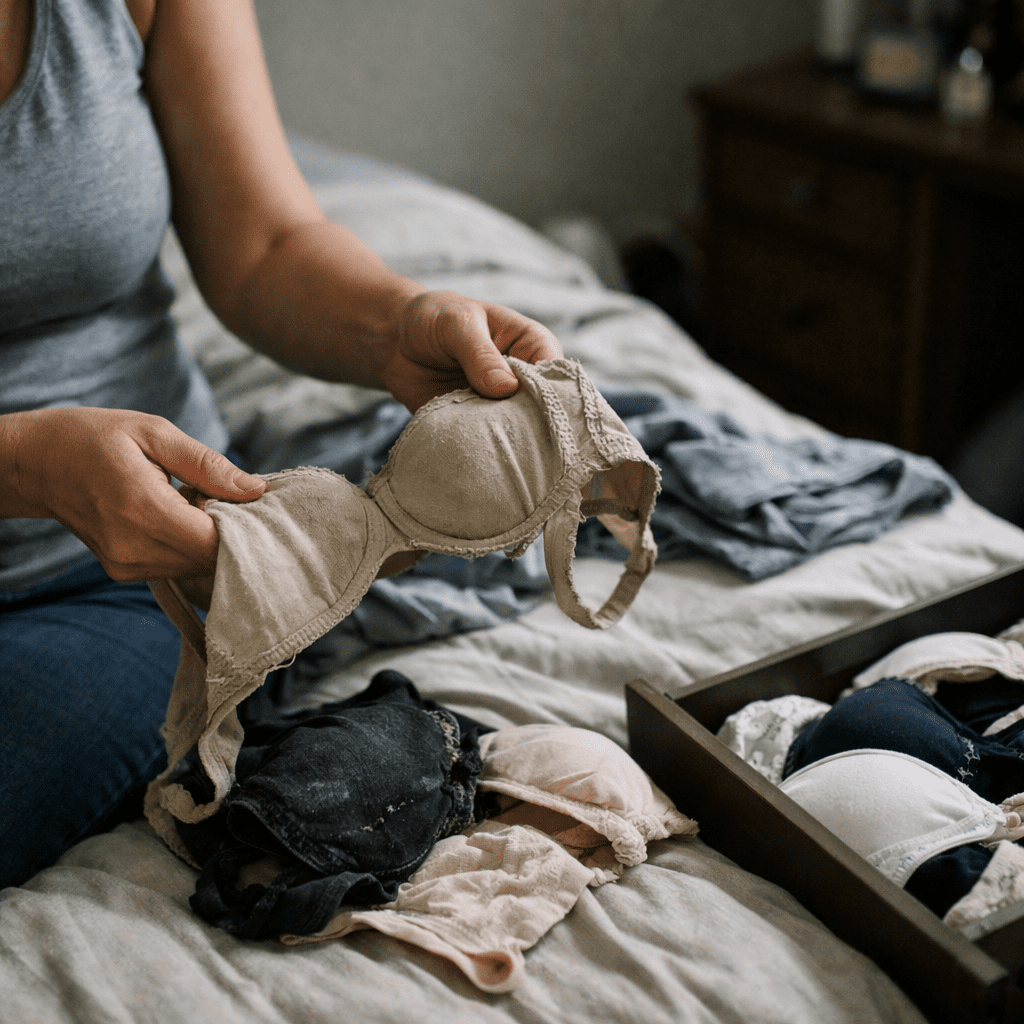
Why Knowing When to Replace Your Bra Matters
A well-fitting bra does more than complete an outfit—it supports your posture, helps your clothes sit correctly, and can prevent everyday discomfort like shoulder grooves or back strain. Yet many people keep bras far past their “best by” date because the changes happen gradually. Elastic loosens little by little, straps stretch, and cups lose their shape, so it’s easy to miss the moment when support starts to slip. Learning when to replace your bra is one of the simplest ways to protect comfort and maintain a flattering fit.
Bras are also among the most hardworking items in a wardrobe. They’re worn close to the body, exposed to sweat and body oils, and repeatedly stretched and compressed with every wear. Even with careful washing, the materials fatigue over time. If you’ve been wondering whether your favorite bra is still doing its job, a few clear signs can tell you it’s time for an upgrade.
How Long Should A Bra Last?
There isn’t a single expiration date that works for everyone, but most bras have a practical lifespan based on how often they’re worn and how they’re cared for. A bra worn multiple times per week will naturally wear out faster than one rotated occasionally. As a general guideline, many people find their bras perform best for several months to around a year with regular use—especially if they’re rotated with other bras rather than worn on consecutive days.
Rotation is key for bra longevity. Giving elastic time to recover between wears helps maintain support. Washing method matters too: frequent machine washing, hot water, harsh detergents, and tumble drying can weaken elastic, warp underwires, and break down the fabric faster. If you want your best bras to last, gentle washing and air drying make a noticeable difference.
Key Signs It’s Time To Replace Your Bra
When a bra is nearing the end of its life, it usually shows it in the fit. One of the most common signals is a band that rides up the back. The band provides the majority of the support, so when it’s loose, the bra can’t anchor properly. If you find yourself constantly tugging the back down or tightening straps to compensate, the band has likely stretched beyond recovery.
Another red flag is needing to hook the bra on the tightest setting just to get adequate support. New bras should typically fit best on the loosest or middle hooks, allowing you to tighten as the elastic relaxes. If you’re already at the tightest hooks and it still feels loose, replacement is usually the best solution.
Cup issues are also telltale. If the cups have wrinkling, gaping, or a collapsed shape, the fabric may have lost structure. Conversely, if you’re spilling over the top or sides, your size needs reassessment—either because your body has changed or because the bra has distorted and no longer matches you. Underwire discomfort can be another clue: wires that poke, twist, or sit painfully may be warped or working their way through thinning fabric.
Pay attention to straps as well. Straps that keep slipping even after adjustment, or that must be tightened excessively to feel supportive, can indicate worn-out elastic. A bra shouldn’t rely on the straps to do the heavy lifting—if it does, it’s usually because the band and overall structure have weakened.
Fit Changes That Signal A New Bra Size (Not Just A New Bra)
Sometimes the problem isn’t that the bra is old—it’s that your body has changed. Weight fluctuations, hormonal shifts, pregnancy, postpartum changes, menopause, and even changes in exercise routine can affect band and cup size. If you suddenly feel pinching, overflow, gaping, or your neckline fit looks dramatically different, it may be time for a fitting rather than simply buying the same size again.
Signs you may need a different size include persistent underwire digging (even with a relatively new bra), the center gore (the panel between the cups) not lying flat against your chest, or cups that consistently shift throughout the day. If you’ve been buying bras based on an old size for years, a fresh measurement can be eye-opening—and instantly improve comfort.
Comfort, Support, And Posture: What You Should Feel In A Good Bra
A supportive bra should feel secure but not restrictive. The band should sit level around your ribcage and stay in place when you raise your arms. The cups should fully contain breast tissue without bulging or empty space. Straps should feel like they’re assisting rather than supporting the full weight of the bust. When a bra fits properly, it often disappears from your awareness—no constant adjusting, no pressure points, no distracted fidgeting.
Beyond comfort, a good bra can influence how your clothes fit, especially in the bust and waistline. If your bras are worn out, you might notice tops pulling oddly, gaping at buttons, or a less defined silhouette. Improved support can also help reduce the temptation to hunch forward, which is a common posture habit when support is lacking.
How To Make Your Bras Last Longer
If you want to extend the life of your bras, start with a simple routine. Rotate between multiple bras so each one has recovery time. Wash as gently as possible—hand washing is ideal, but if you use a machine, place bras in a lingerie bag, use a delicate cycle, and choose cool water. Always air dry; heat from dryers can break down elastic quickly and cause misshaping.
Store bras in a way that protects cup structure. Molding and padding can crease if bras are folded incorrectly. Laying them flat or nesting molded cups together helps preserve their shape. Finally, keep an eye on small repairs: if a hook is loose or a strap slider is failing, fixing it early can prevent premature replacement.
When In Doubt, Replace For Better Fit And Confidence
If you’re debating whether to replace your bra, a quick at-home check can help: does the band stay level, do the cups sit smoothly, and do you feel supported without over-tightening the straps? If the answer is no—and especially if you’re experiencing discomfort—the most effective solution is often a new bra in the right size and style for your current shape.
Replacing a bra isn’t just about aesthetics; it’s about daily comfort, support, and feeling confident in your clothes. A small update to your lingerie drawer can have an outsized impact on how you move through the day.
You can explore the full article by going to https://www.divinebeautytips.com/how-to-know-when-its-time-to-replace-your-bra/.