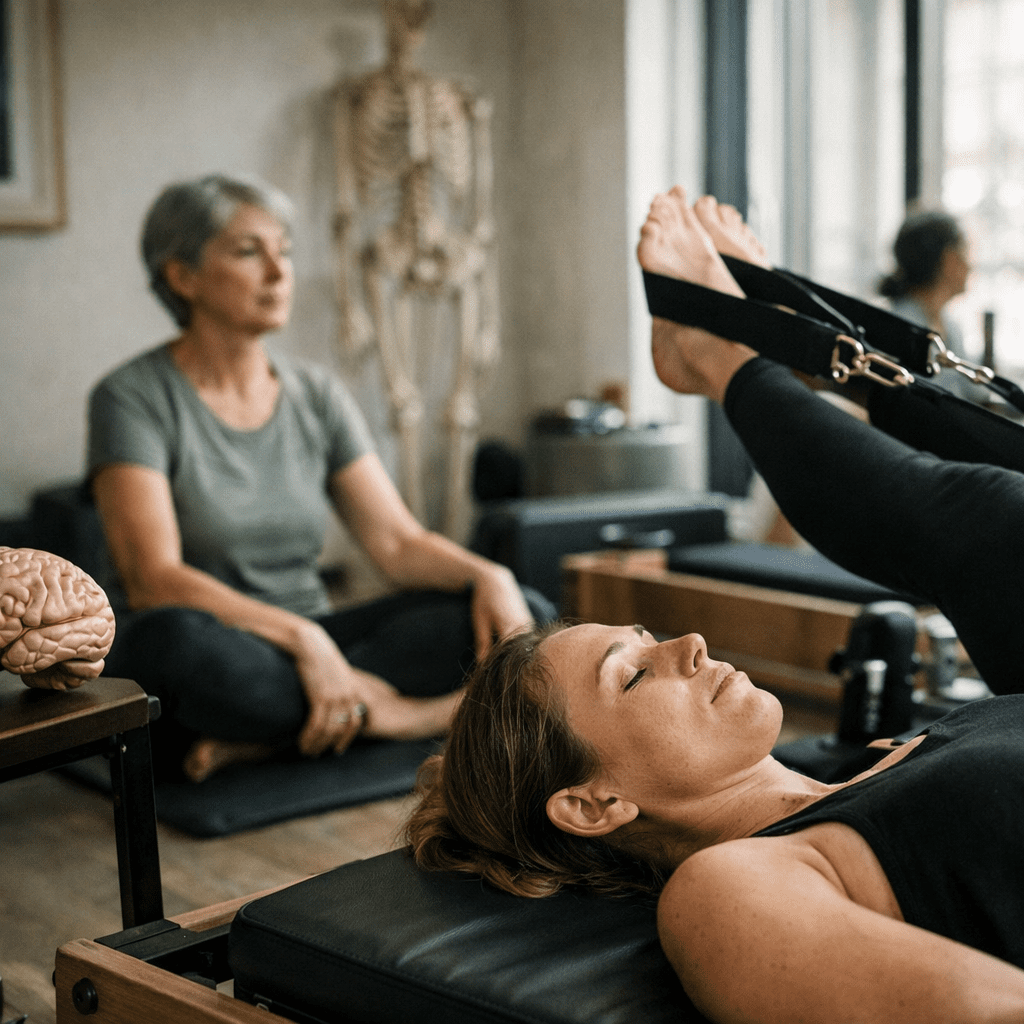
Pilates has become one of the most sought-after forms of exercise for people who want to feel stronger, move better, and support their wellbeing from the inside out. While many recognise Pilates for its ability to sculpt the core and improve posture, the real story is bigger: consistent practice can deliver meaningful benefits for both the brain and body. From improved movement control and joint stability to better stress management and focus, Pilates is a smart, sustainable approach to health that fits modern lifestyles.
Why Pilates Is More Than Just A Core Workout
It’s true that Pilates is famous for “core strength,” but the method is designed to build whole-body integration. Pilates trains the deep stabilising muscles that support your spine, pelvis, and shoulders, helping you move efficiently and safely in daily life. Because the movements are typically controlled and precise, Pilates encourages high-quality repetitions over high intensity—supporting strength, coordination, and muscular endurance without excess strain.
Unlike workouts that focus only on isolated muscles or maximal load, Pilates emphasises alignment, breathing, and smooth sequencing. That makes it accessible for a wide range of fitness levels, while still offering progression and challenge when practiced regularly.
Improved Posture, Alignment, And Muscular Balance
Modern routines often involve long hours sitting, screen time, and repetitive movement patterns that can lead to rounded shoulders, tight hips, and a stiff spine. Pilates directly addresses these issues by strengthening underactive muscles and improving mobility where it’s commonly limited. Over time, this can enhance posture and reduce the feeling of tension caused by poor alignment.
Pilates programs often include exercises that open the chest, strengthen the upper back, and create better pelvic stability. This blend of mobility and strength can help you stand taller, sit with less fatigue, and move with more ease—benefits that carry into everyday activities and other forms of training.
Better Mobility, Flexibility, And Joint Support
Flexibility in Pilates is not just about stretching; it’s about developing usable range of motion that you can control. Many Pilates movements take joints through gentle, functional ranges while teaching the muscles to support those positions. This approach can be especially useful for people who feel stiff or restricted, as well as those who want to protect joints while improving movement quality.
Because Pilates is commonly low-impact, it can be a joint-friendly option for people seeking a sustainable fitness routine. The focus on alignment and control also helps reduce unnecessary compensation patterns that can contribute to aches and pains.
Stronger Core And A More Stable Spine
A strong core is about more than visible abdominal muscles—it’s about creating stability and control through the trunk, including the deep abdominals, pelvic floor, multifidus, and muscles that support optimal breathing mechanics. Pilates is well known for improving this “inner unit” strength, helping the spine feel supported during movement.
This can be valuable for athletes aiming to improve performance, as well as for everyday movers who want better balance and reduced strain during lifting, carrying, or prolonged standing. Over time, improved core function can translate into smoother, more confident movement patterns.
Brain Benefits: Focus, Mind-Body Connection, And Coordination
Pilates is often described as mindful movement for a reason. Each session asks you to pay attention to breath, alignment, and technique, which naturally strengthens the mind-body connection. This kind of intentional training can sharpen body awareness (proprioception), helping you recognise how you move and where you may be compensating.
As you learn sequences, refine control, and coordinate breathing with movement, the brain is actively engaged. That mental involvement can support better coordination and improved movement efficiency—useful not only in fitness, but in daily tasks that require balance and stability.
Stress Reduction And Mood Support Through Breath-Led Movement
One of the standout features of Pilates is the emphasis on breathing. Controlled breathing can help regulate the nervous system, encourage relaxation, and reduce stress levels. When paired with gentle, focused movement, Pilates becomes a powerful tool for mental wellbeing—a way to switch off from constant stimulation and reconnect with your body.
Many people report feeling calmer and more grounded after a Pilates session. Because classes typically encourage concentration and smooth pacing, Pilates can offer a restorative effect while still improving strength and mobility. This makes it an excellent option for those looking to balance intense training, busy schedules, or high-stress lifestyles.
Support For Back Health And Everyday Comfort
Pilates is widely used to support back health because of its core-centric approach and focus on spinal alignment. By strengthening the muscles that stabilise the trunk and pelvis, Pilates can reduce the overload often placed on the lower back. Additionally, improved hip mobility and thoracic (upper back) movement can help distribute forces more evenly through the body.
While Pilates is not a substitute for medical advice, many people use it as part of a broader strategy to move more comfortably, build resilience, and feel stronger in daily life. The emphasis on controlled technique is key—consistent practice tends to deliver the best results.
How To Get Started And Make Pilates Work For You
Beginners can start with mat-based Pilates, which requires minimal equipment and builds a strong foundation in breathing, alignment, and control. As confidence grows, sessions can be progressed with small props or more challenging sequences. The most important factor is quality instruction and a focus on form—Pilates rewards precision.
To experience both brain and body benefits, aim for regular sessions—whether that’s weekly classes, short home workouts, or a blended approach. Listening to your body and progressing gradually helps ensure Pilates remains safe, enjoyable, and effective.
The Takeaway: Pilates Builds Strength, Stability, And Mental Clarity
Pilates stands out because it trains the whole person. Physically, it supports core strength, posture, mobility, and joint stability. Mentally, it encourages focus, coordination, and a calmer nervous system through breath-led, mindful movement. Whether your goal is to move better, feel stronger, manage stress, or build a sustainable fitness routine, Pilates offers a practical path forward with benefits you can feel on and off the mat.
They can explore the full article by going to the following link: https://www.futurefit.co.uk/blog/brain-and-body-benefits-of-pilates/