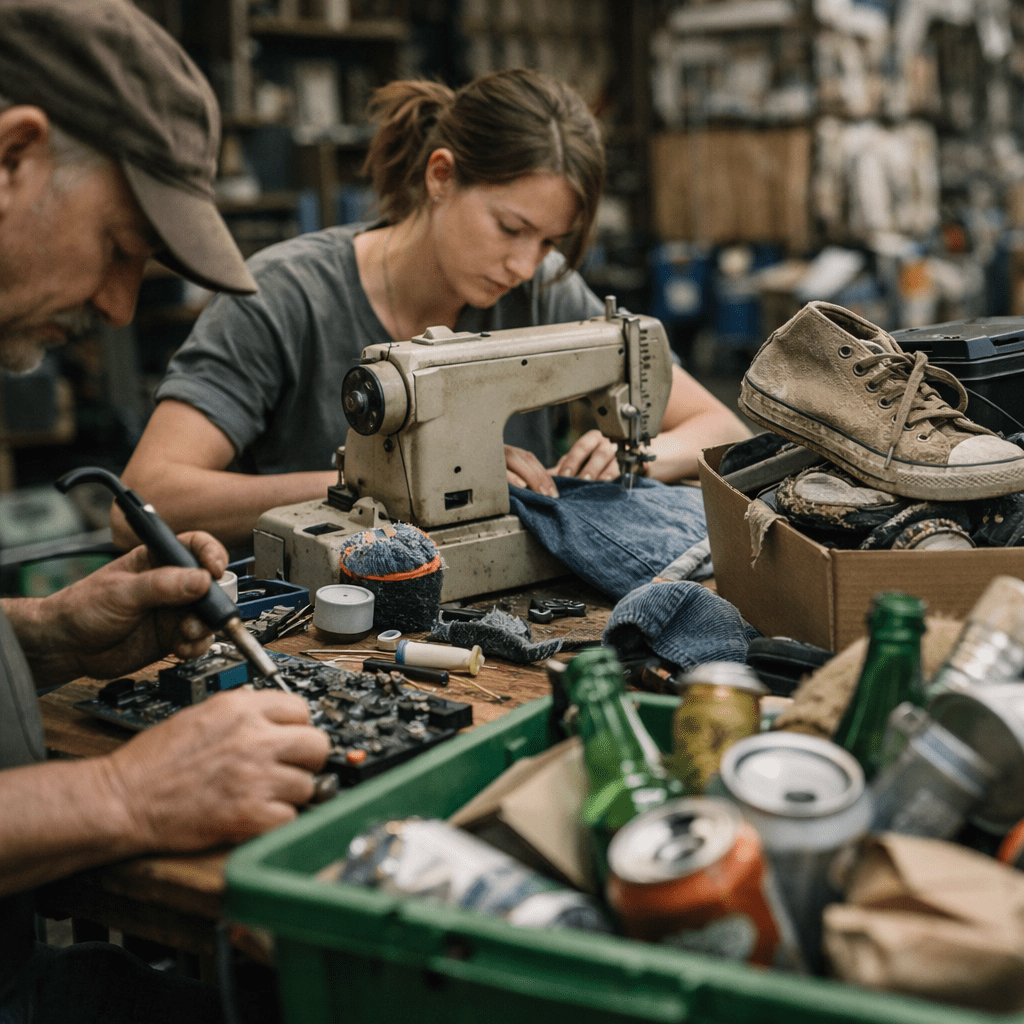
As organisations and individuals look for practical ways to reduce environmental impact, the familiar “reduce, reuse, recycle” message is evolving into something more actionable and results-focused: repair, reuse, and re-cycle. This approach, explored in “Repair, reuse, recycle.. for sustainability,” highlights how everyday choices—supported by smarter systems—can extend product life, cut waste, and help embed sustainability into the way we live and work. From electronics and household items to business equipment and materials, the concept centres on keeping resources in use for longer while reducing unnecessary consumption.
Why Repair Comes First In A Sustainable Circular Economy
Repair is often the most overlooked yet powerful sustainability lever. When we repair rather than replace, we immediately reduce demand for new manufacturing, which in turn cuts carbon emissions, raw material extraction, and energy consumption. Repair also reduces the volume of items sent to landfill and lowers the burden on recycling systems that are not designed to handle every material type effectively.
In a circular economy, repair sits at the top because it preserves the most value. The labour, materials, energy, and transport embedded in a product remain useful when an item is fixed and kept in service. For businesses, a repair-first mindset can also support ESG goals by demonstrating genuine resource efficiency, not simply recycling at the end of life.
Reuse As A Practical Route To Waste Reduction
Reuse is the next strongest step because it keeps products functioning without the additional processing that recycling requires. Reuse can be as simple as passing items on, repurposing components, or choosing refurbished equipment where appropriate. The sustainability benefits are clear: reusing reduces demand for virgin materials, limits packaging waste, and lowers emissions created by producing and shipping new goods.
For organisations, reuse can be embedded through procurement and asset management policies—buying durable items, choosing modular designs, and prioritising suppliers that provide spares or refurbishment options. For individuals, reuse shows up through second-hand purchasing, swapping, donating, and thinking creatively about how items can serve a second purpose. In every case, reuse helps prevent “premature disposal,” where something still valuable is treated as waste.
Re-Cycle: Rethinking Recycling As Part Of A Wider System
Recycling matters, but it works best when supported by repair and reuse. The “re-cycle” idea focuses on keeping materials circulating in a more intentional way rather than treating recycling as a catch-all solution. Not everything is recyclable in practice, and even recyclable materials can be contaminated, processed inefficiently, or exported to systems that don’t guarantee positive outcomes.
A more sustainable approach is to view recycling as one part of a broader strategy: reduce what you buy, repair what you can, reuse what still works, and then recycle what truly cannot be used again. This hierarchy helps ensure that the environmental value of materials is preserved as much as possible before energy-intensive end-of-life processing is considered.
The Real-World Benefits Of Repair And Reuse
Repairing and reusing have tangible benefits that go beyond environmental impact. They often reduce total cost of ownership by extending asset lifespan and avoiding frequent replacement. They also promote resilience by reducing reliance on global supply chains and scarce materials. In addition, repair and reuse can strengthen local economies by supporting skilled work—repair technicians, refurbishment services, and parts suppliers.
There’s also a behavioural benefit: when people repair and reuse, they begin to think differently about consumption. Purchases become more intentional, product care improves, and waste is seen as a design flaw rather than an inevitable outcome. That shift in mindset is essential for sustainability progress because it tackles the root cause—overconsumption—rather than merely managing the symptoms.
How Businesses Can Build A Repair-Reuse Culture
Organisations looking to improve sustainability can do so by embedding repair and reuse into everyday operations. Key steps include tracking assets more effectively, budgeting for maintenance, and adopting procurement rules that reward durability and repairability. Selecting products with available spare parts, clear servicing instructions, and modular components can dramatically improve repair success rates.
Businesses can also partner with suppliers and service providers who offer take-back schemes, refurbishment programmes, or warranty extensions. Internally, training teams to handle basic fixes and preventive maintenance can reduce downtime and extend equipment life. The result is a sustainability strategy that’s measurable: fewer replacements bought, less waste produced, and lower emissions embodied in procurement.
How Individuals Can Apply Repair, Reuse, And Re-Cycle At Home
For individuals, the most effective sustainability actions are often the most straightforward. Start by maintaining items properly—cleaning, storing, and caring for them to reduce wear and tear. When something breaks, look for repair options before replacing it, whether that means a local repair shop, manufacturer support, or safe DIY fixes. When you no longer need something that still works, offer it for reuse through donation, resale, or community sharing.
Recycling then becomes the final step, done carefully and correctly. Sorting waste properly, following local collection rules, and avoiding contamination makes recycling far more effective. Where possible, choose materials and packaging that are widely recyclable in your area, and avoid “wish-cycling,” where non-recyclable items are placed in recycling bins in the hope they’ll be processed.
Design And Responsibility: The Bigger Picture Behind Sustainability
Repair, reuse, and re-cycle also point to a bigger shift in responsibility. Sustainability is not only about consumer choices; it’s also shaped by the products and systems made available to us. When items are designed to be difficult to repair—sealed components, proprietary parts, limited access to spares—waste increases. When products are designed for longevity and repair, sustainability becomes easier and more economical.
This is why conversations around repairability, circular design, and responsible production are increasingly important. Encouraging better design standards, supporting right-to-repair initiatives, and choosing brands that prioritise longevity can all help move sustainability from a personal ideal to a practical norm.
Making Sustainability Measurable And Meaningful
One of the strengths of the repair-reuse-re-cycle approach is that it is measurable. You can track reductions in waste, fewer new items purchased, longer asset lifespans, and better recycling quality. For households, it may show up as fewer bin bags, lower spending on replacements, and fewer single-use items. For organisations, it can become part of sustainability reporting through procurement data, waste audits, and lifecycle assessments.
Most importantly, it makes sustainability meaningful. Instead of relying on abstract targets, it focuses on practical actions that people can take daily—choices that keep materials in use and reduce unnecessary demand on the planet’s resources.
To dive deeper into the ideas behind repair, reuse, and re-cycle for sustainability, you can explore the full article here: https://www.vivination.co.uk/repair-reuse-re-cycle-for-sustainability/.