The Art And History Of Dry Aging
Dry aging is one of the most respected techniques in the world of meat, celebrated for its ability to transform a good cut into something deeply flavorful, tender, and restaurant-worthy. While the method can feel modern—often associated with premium steakhouses and specialty butchers—its roots stretch back through culinary history, when aging was a practical way to improve texture and develop richer taste. Today, dry aged beef is prized for its distinctive nutty, buttery, intensely “beefy” character and its luxurious mouthfeel.
This article explores the art and history of dry aging, how the process works, why it became such an important tradition, and what makes it a top choice for steak lovers who want the ultimate eating experience.
What Dry Aging Means And Why It Matters
Dry aging is the controlled aging of beef in open air under carefully managed conditions. Unlike wet aging (where beef is sealed in vacuum bags), dry aging allows moisture to evaporate from the surface while enzymes naturally break down muscle fibers. The result is a steak that is both more tender and more concentrated in flavor. This dual effect—tenderization plus flavor concentration—is what makes dry aging such a standout technique.
Because it requires time, space, careful temperature and humidity control, and trimming of the outer crust, dry aging is more expensive than other methods. Yet for many cooks and diners, the payoff is unmistakable: a richer aroma, a deeper savory profile, and a signature dry-aged taste that’s hard to replicate any other way.
The Historical Roots Of Dry Aged Beef
Long before modern refrigeration, aging meat was often a necessity. After an animal was slaughtered, cooks learned that meat could be tough if prepared immediately, but improved after resting. Over time, traditional storage methods evolved into more deliberate aging practices. In colder climates and in professional kitchens, hanging meat for days or weeks became part of producing better meals.
As food systems industrialized, aging methods became more standardized. The widespread availability of refrigeration changed how meat was stored and distributed, but it also created the opportunity to perfect dry aging with consistent temperatures and controlled environments. What began as practical know-how eventually became a craft—one that chefs, butchers, and serious home cooks continue to refine.
How The Dry Aging Process Works
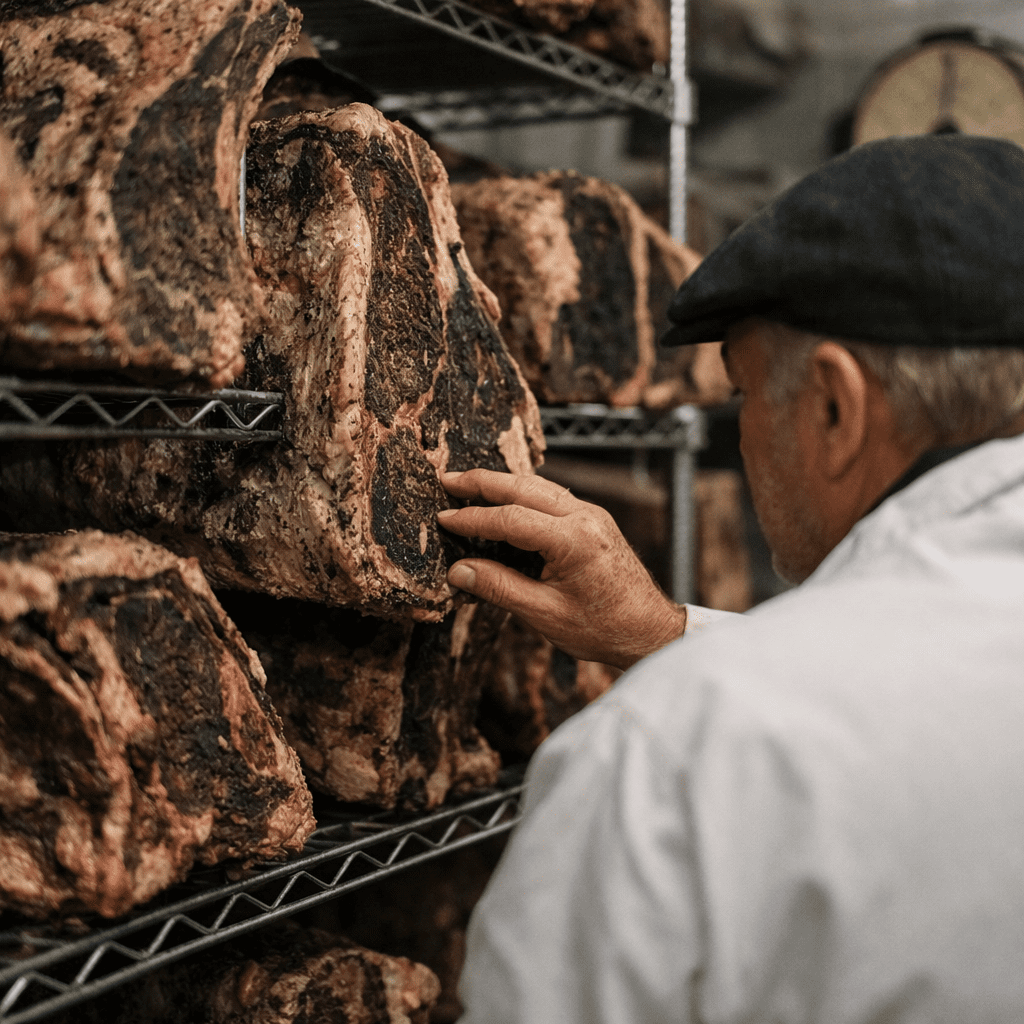
Dry aging relies on three central factors: time, airflow, and control. Beef is placed on racks in a dedicated environment where cool temperatures slow spoilage, humidity prevents excessive drying, and airflow reduces unwanted bacterial growth. Over days and weeks, the surface dehydrates and forms a dark outer layer, often called the “crust.” This crust is typically trimmed away before cutting the beef into steaks.
Inside, natural enzymes do their work. They break down proteins in the muscle, improving tenderness and creating a more refined texture. At the same time, evaporation reduces the water content of the beef. This moisture loss means the flavors become more concentrated, which is one reason dry aged steak tastes so intensely beef-forward compared to standard steak.
Flavor Development: The Signature Dry Aged Taste
The appeal of dry aging is largely about flavor. As the beef ages, it develops complex notes that many people describe as nutty, earthy, or even slightly cheesy—without losing the essential savory backbone of high-quality beef. The final taste depends on the cut, the fat content, the length of aging, and the environment in which the beef is aged.
Fat plays a major role here. Well-marbled beef tends to age more successfully because fat protects the meat and contributes to the richness of the final result. This is why dry aging is commonly associated with premium cuts and higher grades of beef. When done well, the outcome is a steak experience that feels deeper, rounder, and more aromatic than typical beef.
Time Frames: How Long Does Dry Aging Take?
Dry aging can span from a couple of weeks to over a month, and in some specialty contexts, even longer. Shorter aging periods generally create modest improvements in tenderness and a gentle uptick in flavor. As aging time increases, the flavor becomes more pronounced and distinctively “dry aged.” Many enthusiasts enjoy the balance that comes from aging long enough to build complexity while still maintaining a broad appeal.
Longer aging also comes with more trim loss and more weight loss from moisture evaporation, which increases cost. That’s part of what makes a well-aged steak feel like a luxury item: it represents time, craft, and intentional sacrifice of yield for quality.
Dry Aging Vs. Wet Aging
Dry aging and wet aging are often compared because both are intended to improve meat. Wet aging is more common in supermarkets and large-scale distribution because it is efficient: the beef is sealed in plastic, aged in its own juices, and experiences less moisture loss. Wet-aged beef can become tender, but it typically lacks the concentrated, nutty complexity that comes from dry aging.
Dry aging, by contrast, is about transformation through exposure and evaporation. It’s less about convenience and more about creating a standout result with a signature flavor profile. For steak lovers seeking that classic steakhouse character, dry aged beef remains the gold standard.
The Craft Element: Why Dry Aging Is An Art
Dry aging is often described as an art because small choices can influence the final outcome. Temperature, humidity, airflow, cleanliness, and timing all shape how the beef develops. But beyond the technical factors, there’s also judgment involved: selecting the right cut, choosing the ideal aging duration, and determining when the flavor has reached its peak.
This is why many butchers and chefs treat dry aging as both science and tradition. It demands discipline, patience, and experience—along with a respect for the ingredient itself. When everything aligns, dry aging turns a simple steak dinner into a culinary event.
Why Dry Aging Remains Popular Today
In an era where speed and efficiency dominate food production, dry aging remains popular precisely because it slows things down. It represents craftsmanship, intentionality, and an appreciation for flavor development that can’t be rushed. For home cooks, it’s also a gateway into deeper meat knowledge—helping people understand cuts, fat content, texture, and the way time can reshape ingredients.
Whether enjoyed at a steakhouse or sourced from a skilled butcher, dry aged beef continues to symbolize the upper tier of steak experiences. It’s not only about tenderness; it’s about savoring complexity and celebrating a method that has endured across generations.
They can explore the full article by going to the following link: https://cookandhook.com/the-art-and-history-of-dry-aging/.