Why Sustainable Living Matters More Than Ever
Living sustainably is about making everyday choices that reduce waste, conserve resources, and support healthier communities. The great news is that a sustainable lifestyle doesn’t require perfection or a complete overhaul of your routine. Instead, meaningful change often comes from small, consistent habits—like using what you already have, cutting down on single-use items, and being more mindful about energy and water consumption. The ideas shared in “Tips to living a more sustainable life” highlight practical ways to lower your environmental footprint while still enjoying comfort, convenience, and affordability.
For anyone who feels overwhelmed by climate headlines or unsure where to start, a sustainability checklist built around simple actions can be empowering. Sustainable living also tends to bring side benefits: lower household expenses, less clutter, improved air quality at home, and a stronger sense of connection to your local community.
Start With A Waste-Reducing Mindset
One of the strongest foundations of eco-friendly living is shifting from a disposable culture to a “reduce, reuse, recycle” mindset—prioritizing reduction first. That means buying less, choosing durable products, and looking for packaging-free (or low-packaging) options whenever possible. Before purchasing something new, consider whether you can borrow it, repair what you have, or source it secondhand. This approach cuts down on landfill waste and reduces the energy and raw materials needed to manufacture new goods.
Another helpful habit is to build a “reusables kit” you can grab on the way out the door. Reusable shopping bags, a water bottle, a coffee cup, and reusable utensils can replace dozens—if not hundreds—of disposable items over time. Even implementing just one of these swaps can significantly reduce household waste.
Choose Reusables Over Single-Use Plastics
Single-use plastics are a major contributor to pollution because they’re designed for moments of convenience but can persist in the environment for decades. Moving away from disposable plastic bags, plastic wrap, bottled drinks, and takeout containers is one of the most visible ways to adopt sustainable habits. Reusable containers for lunches and leftovers, refillable bottles, and cloth napkins can quickly become part of a simple, sustainable routine.
In the kitchen, consider creating systems that make reusables the default. Keep reusable bags near your keys, store food in glass or sturdy containers, and use a refillable soap dispenser at the sink. These changes reduce waste without adding complexity—once you set up the habit, it becomes second nature.
Build Greener Habits In The Kitchen
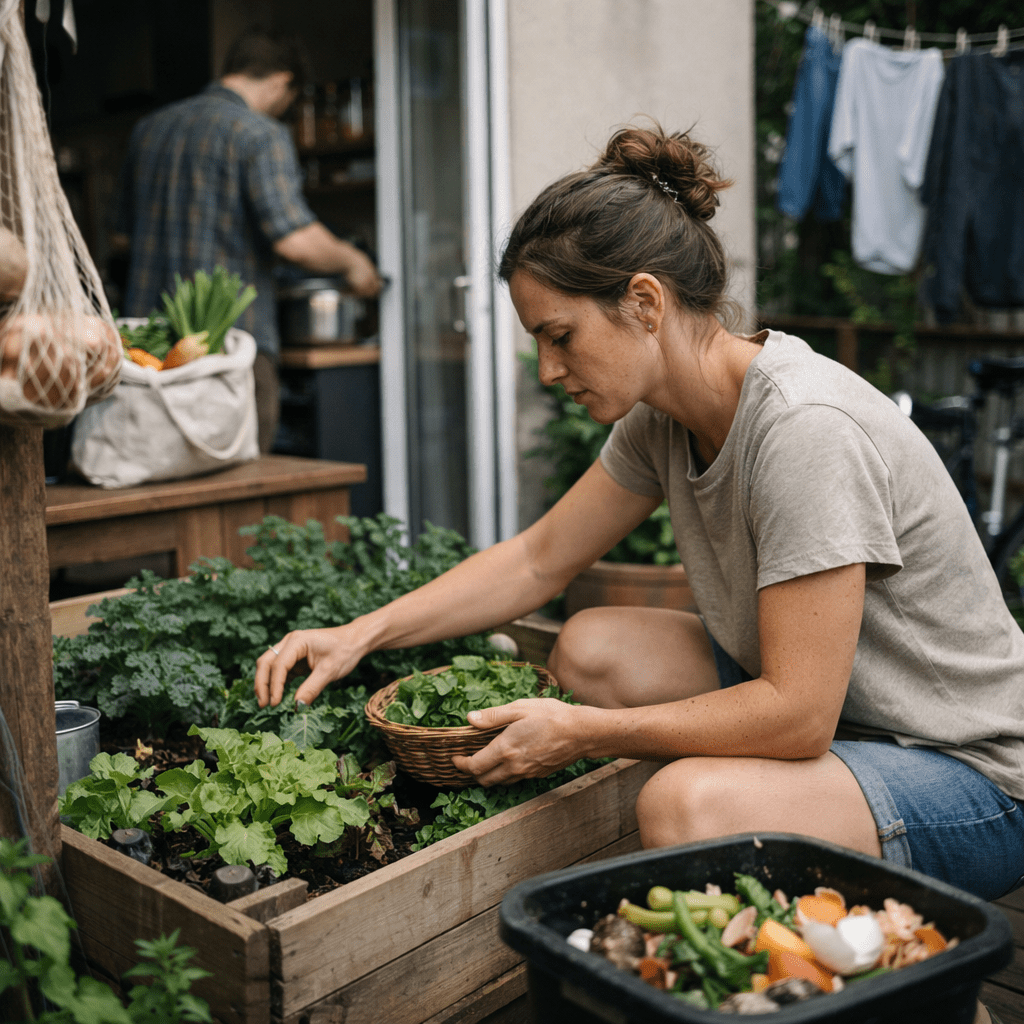
The kitchen is often the best place to start living more sustainably because food choices and food waste have a direct impact on your environmental footprint. Planning meals can help reduce food waste, while learning to store produce correctly extends freshness and reduces the need to toss spoiled items. Composting food scraps is another powerful step—diverting organic waste from landfills and turning it into nutrient-rich soil.
Shopping with sustainability in mind can also make a difference. When your budget allows, prioritize local and seasonal foods to cut down on transportation emissions and support regional growers. Choosing more plant-forward meals—even a few times a week—can reduce the carbon intensity of your diet while expanding the variety of foods you enjoy.
Cut Energy Use With Simple Home Updates
Energy conservation is a core part of sustainable living, and many improvements don’t require expensive renovations. Turning off lights when leaving a room, unplugging rarely used electronics, and using power strips can reduce “phantom” energy draw. Switching to energy-efficient light bulbs is another easy win, offering long-term savings and lower energy use.
Heating and cooling are often the biggest drivers of household energy consumption. Adjusting your thermostat by even a degree or two, using curtains strategically to retain heat or block sun, and ensuring doors and windows are sealed can all make your home more efficient. These changes support a greener lifestyle while keeping utility bills under control.
Use Less Water Without Sacrificing Comfort
Water conservation is an important part of eco-friendly living—especially as many regions face increased pressure on water supplies. Simple habits like turning off the tap while brushing your teeth, taking shorter showers, and running full loads of laundry and dishes can reduce water usage immediately.
If you want to go further, consider low-flow fixtures for faucets and showerheads. Even small changes compound over time, and reducing hot-water use also saves energy, making water conservation a two-for-one sustainability win.
Shop Smarter: Buy Less, Buy Better, Buy Secondhand
Sustainable shopping isn’t about never buying anything—it’s about buying thoughtfully. Prioritizing quality over quantity reduces the cycle of replacing cheap, short-lived products. When you do need something, secondhand options can keep items in use longer and reduce demand for new production.
Clothing is a great example: thrifting, clothing swaps, and purchasing timeless basics can help reduce textile waste. If you’re buying new, considering durability, repairability, and brand transparency can support more responsible consumption. Over time, shopping with intention leads to a simpler home, less waste, and a lifestyle that aligns with sustainability goals.
Rethink Transportation For A Lower Carbon Footprint
Transportation is another area where small shifts add up. Walking, biking, carpooling, and using public transportation can lower emissions while supporting healthier daily routines. Even combining errands into one trip cuts fuel use and reduces time spent on the road.
If driving is necessary, keeping tires properly inflated and staying on top of maintenance helps improve fuel efficiency. The key is to identify changes that are realistic for your schedule and location—sustainable life choices work best when they’re practical enough to stick.
Make Sustainability A Community Effort
Living a more sustainable lifestyle can be easier and more enjoyable when it’s shared. Community gardens, neighborhood cleanups, local sustainability events, and nonprofit initiatives create opportunities to learn, connect, and multiply impact. Supporting local businesses and organizations can also strengthen your community’s resilience while reducing the environmental costs linked to long-distance shipping and large-scale supply chains.
Even informal actions matter: sharing resources, donating usable goods, or helping friends learn easy sustainable swaps. When more people participate, sustainability becomes less about individual perfection and more about collective progress.
Focus On Progress, Not Perfection
The most sustainable lifestyle is one you can maintain long-term. Rather than trying to change everything at once, start with one or two habits—like carrying a reusable bottle, reducing food waste, or switching to energy-efficient bulbs—and build from there. Each action helps reduce your footprint, and the cumulative effect over months and years can be significant.
If you’d like to dive deeper into these practical ideas, you can explore the full article here: https://gatherbaltimore.org/tips-to-living-a-more-sustainable-life/.