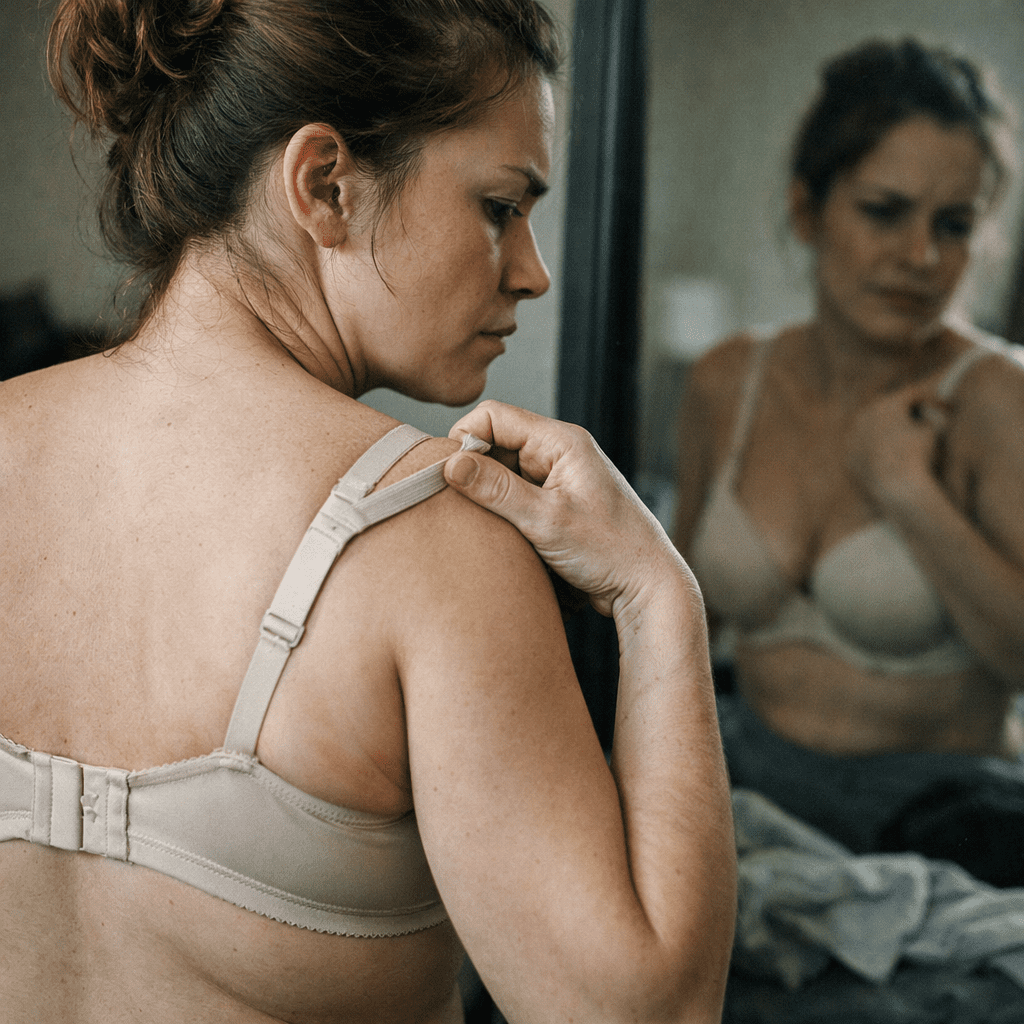
Wearing the right bra size is about far more than comfort—your fit affects posture, confidence, outfit styling, and even how your clothes sit throughout the day. Yet many people continue to wear bras that don’t truly fit, often because the signs are subtle at first or because they assume discomfort is “normal.” The reality is that a well-fitting bra should feel supportive and secure without digging, slipping, or leaving you counting down the hours until you can take it off.
Why Bra Fit Matters More Than You Think
A bra is a foundational garment. When it fits correctly, it distributes weight evenly across your body, supports your bust without strain, and creates a smooth silhouette under clothing. When it doesn’t, it can cause pressure points on your shoulders, rubbing around your ribcage, and gaping or spillage that show through tops and dresses. Over time, an ill-fitting bra may also contribute to back or neck tension, especially for fuller busts.
Understanding the most common fit issues helps you adjust your size, band, or cup shape—and makes shopping for bras far more successful. Below are the key indicators that your bra may not be doing its job properly.
1) Straps That Dig In Or Slip Off
Bra straps should sit comfortably on your shoulders without carving grooves into your skin or constantly sliding down your arms. If straps dig in, it often means your band isn’t providing enough support, causing your shoulders to take on too much of the load. Tightening straps isn’t a true fix; it’s usually a sign you need a firmer band or a better cup fit.
On the flip side, straps that slip off regularly may indicate the bra’s overall shape doesn’t match your frame (for example, straps set too wide), the band is too loose, or the cup fit isn’t stable enough. A properly fitted bra stays in place while you move—without you adjusting it all day.
2) A Band That Rides Up Your Back
The band is the anchor of your bra. If the back of your band rides up—even slightly—it’s a strong sign your band size is too large or has stretched out over time. When the band moves upward, the cups can tilt forward, reducing support and leading to gaping, spillage, or an overall “floating” feel.
A good test: your band should sit level around your torso, parallel to the floor. It should feel snug but not restrictive, and you should be able to fit two fingers underneath comfortably.
3) Underwire That Digs, Pokes, Or Sits On Breast Tissue
Underwire should frame your breast tissue, not sit on top of it. If you feel poking at the sides, stabbing near the center, or persistent discomfort under the bust, your bra’s wire shape or cup size may be wrong. Wires that sit on breast tissue can cause irritation and may create the impression that you “just don’t like underwire,” when the real issue is fit.
If the wire is digging into your ribcage, it may also be linked to a band that’s too tight or cups that are too small—both of which can push the wire down and in. Choosing a cup size with more depth, a different wire shape, or a bra style designed for your breast root and spacing can make a dramatic difference.
4) Spillage (Overflow) At The Top Or Sides
Spillage—sometimes called “quad-boob”—happens when the cups can’t contain your bust properly. You might notice a bulge above the cup edge, or tissue spilling out at the sides near the underarm. This is a classic sign the cups are too small, but it can also happen if the bra style is incompatible with your breast shape (for instance, a cup cut that’s too closed on top).
Spillage isn’t just a visual issue; it reduces comfort and support, can increase rubbing, and often leads to frequent adjusting. If you’re seeing overflow, consider going up a cup size, trying a different cup shape, or ensuring your breast tissue is fully scooped into the cups when putting the bra on.
5) Gaping Or Wrinkling In The Cups
If your cup fabric wrinkles, collapses, or gaps—especially at the top—your cups may be too large, the bra style may not match your breast shape, or your band may be too loose and pulling the cups out of position. Gaping can also appear when straps are overtightened in an attempt to increase lift, creating space in the cup where you don’t need it.
It’s important to note that gaping doesn’t always mean “size down.” Sometimes a different style solves the problem: balconette, plunge, full cup, or demi bras all distribute volume differently. The goal is a smooth cup with your breast tissue filling it naturally—no cutting in and no empty space.
6) The Center Gore Doesn’t Sit Flat
The center gore is the panel between the cups. In many underwire bras, it should sit flat against your sternum. If it floats away from your chest, your cups may be too small, your band may be too large, or the bra’s shape may not suit your bust (especially for close-set breasts or certain plunge styles).
A floating gore often comes with other symptoms, like underwire discomfort, spillage, or a lack of stability. When the gore tacks correctly (sits flat), it usually signals that the cups are containing and lifting as intended.
How To Improve Your Bra Fit Quickly
If any of these signs sound familiar, a few targeted adjustments can help you get closer to your best fit:
First, reassess your band. Many fit problems start with a band that’s too loose, which shifts support onto the straps and destabilizes the cups. Next, check cup containment by looking for spillage or gaping. Then consider bra shape—sometimes you can be “the right size” in the wrong style. Finally, remember that sizes vary by brand and even by model, so trying sister sizes (for example, adjusting band size while compensating in cup size) can help you find a better balance.
Final Thoughts On Finding The Right Fit
A well-fitting bra should feel like support—not a struggle. If you’re dealing with digging straps, a rising band, poking wires, spillage, cup gaping, or a center gore that won’t lay flat, it’s a clear sign your current bra isn’t working for your body. The good news is that small changes—like a different band size, cup size, or bra style—can completely transform comfort and appearance.
You can explore the full article by going to this link: https://www.beautyfashionclub.com/six-signs-of-a-badly-fitting-bra/