4 Tips To Get Started With Pilates
Pilates is one of the most effective, beginner-friendly ways to build real-world strength, improve posture, and develop better body awareness—without needing intense impact or complicated equipment. If you’re curious about starting a Pilates routine but aren’t sure where to begin, a few foundational principles can help you feel confident from your first session. Pilates focuses on controlled movement, breath, alignment, and core stability, making it a smart choice for anyone who wants to move better, reduce tension, and support long-term fitness.
If you’re new to Pilates, it’s normal to wonder whether it’s “hard enough,” how often you should do it, or what you need to get started. The good news is that Pilates is highly adaptable: you can start with simple mat work at home, follow a beginner class, or work with an instructor who can tailor the movements to your body. Below are four practical tips to help you start Pilates safely and make progress you can actually feel—stronger core engagement, better mobility, and smoother movement patterns in everyday life.
Tip 1: Learn The Pilates Breathing Method First
Breathing is at the center of Pilates. Before you worry about the “perfect” exercise sequence, learn how to breathe in a way that supports spinal stability and core control. Pilates breathing typically emphasizes inhaling through the nose and exhaling fully through the mouth, often with a gentle “shhh” or pursed-lip exhale. This encourages deeper core engagement and helps you maintain control through each movement.
Why does this matter for beginners? Because breath is a built-in “form check.” If you’re holding your breath, clenching your jaw, or rushing, it usually means you’ve gone beyond your current control level. Slow down, reduce the range of motion, and reconnect with the breath. Over time, this approach helps you build strength without relying on momentum, which is one of the biggest differences between Pilates and more traditional ab-focused workouts.
A simple way to practice: lie on your back with knees bent and feet on the floor. Place one hand on your ribcage. Inhale and feel the ribs expand outward; exhale and feel the ribs soften while the abdominal wall gently draws inward. This is a great “warm-up” before any beginner Pilates routine.
Tip 2: Prioritize Form, Alignment, And Control Over Speed
Pilates rewards precision. Many beginners assume they need to do lots of repetitions to feel results, but Pilates is designed to work through quality reps and mindful movement. Start by focusing on alignment—how your head, ribs, pelvis, and spine stack—and then move slowly enough that you can feel what’s working.
In practical terms, that means keeping your shoulders relaxed (not creeping up toward your ears), avoiding excessive arching in the lower back, and learning to stabilize your pelvis as your arms and legs move. Controlled movement builds the deep stabilizing muscles that support posture and reduce strain during daily activities like sitting, lifting, and walking.
If you’re following a video or group class, give yourself permission to modify. Smaller movement ranges are often more effective for beginners than forcing a big range with poor control. Over time, strength and mobility improve, and your range naturally expands.
Tip 3: Start With Beginner-Friendly Pilates Moves (And Progress Gradually)
Beginning Pilates doesn’t require advanced exercises. In fact, mastering core fundamentals is what sets you up for success. Start with movements that teach spinal stability, pelvic control, and proper muscle engagement. Common beginner-friendly Pilates exercises include pelvic tilts, knee folds, the hundred (modified), bridges, leg slides, and gentle spine articulation work.
The key is progression. Once you can maintain steady breathing and alignment, you can increase the challenge by adding time under tension, incorporating arm and leg extensions, or moving to more integrated sequences. Many people make fast early progress simply by practicing Pilates two to four times a week and keeping sessions consistent rather than intense.
It also helps to build a short routine you can repeat. A 15–25 minute beginner Pilates workout done consistently will generally create better results than a random, longer session you only do occasionally. Consistency improves coordination—one of the hidden benefits of Pilates that supports balance and injury prevention.
Tip 4: Choose The Right Setup—Mat Or Reformer, Class Or Home
One of the best things about Pilates is how accessible it can be. Mat Pilates can be done at home with minimal equipment: a comfortable mat and enough floor space to extend your arms and legs. If you want a little more support, a small pillow or towel for your head and a light resistance band can be helpful. For those who enjoy a guided approach, beginner Pilates classes (in-person or online) can provide structure and motivation.
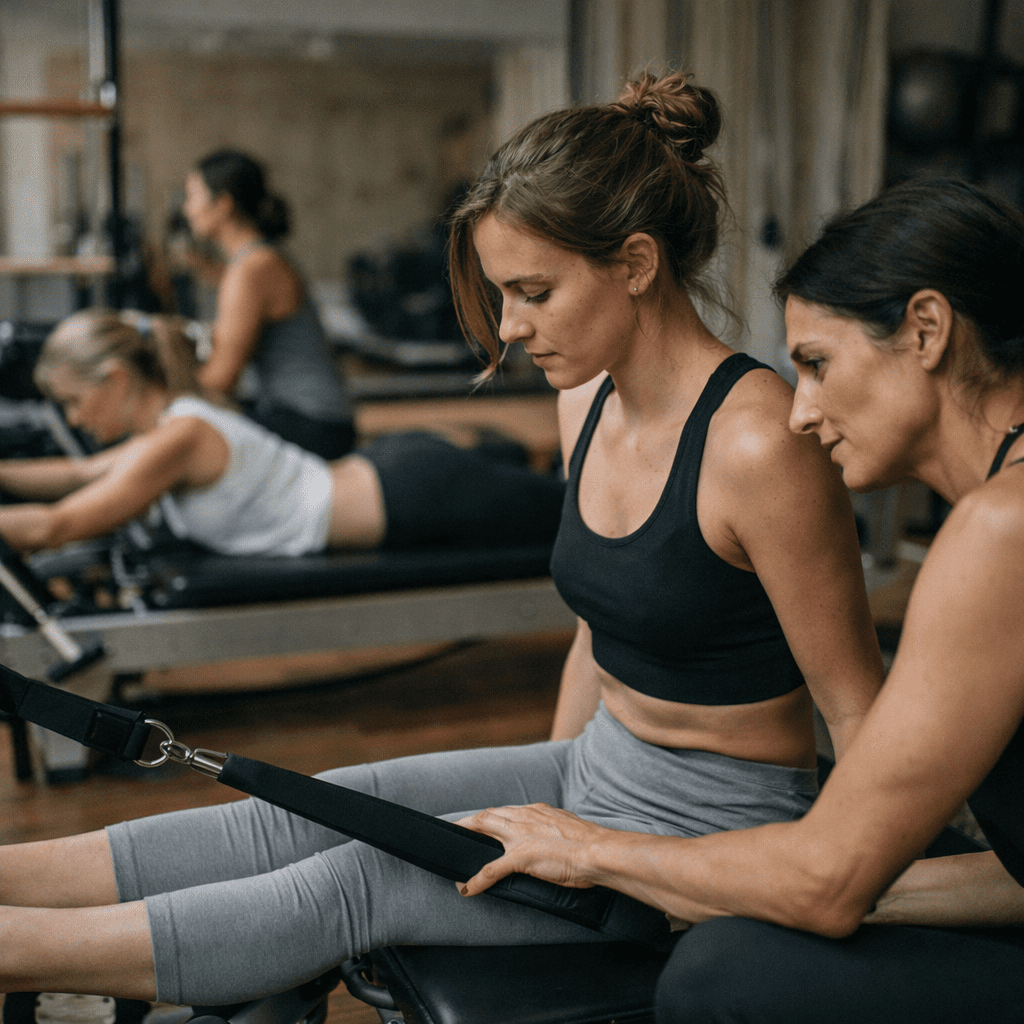
Reformer Pilates is another popular route, using a specialized machine with springs and a sliding carriage to add resistance and assistance. Many beginners find the reformer helpful because it can guide movement patterns, but mat Pilates is equally valuable—especially for learning how to stabilize your body without assistance.
If you have chronic pain, a history of injury, or are postpartum, consider starting with a qualified instructor who can offer personalized modifications. Pilates is often used to support rehabilitation and build functional strength, but you’ll get the best outcome when the movements are matched to your current needs.
Finally, set realistic expectations: Pilates results are often felt first as improved posture, less stiffness, and better core engagement during daily tasks—then seen over time as more defined muscle tone and improved movement quality.
If you’d like to dive deeper into beginner guidance and detailed steps for building a Pilates habit, you can explore the full article here: https://www.womenfitness.net/get-started-with-pilates/.